
Resources
While robots are great at performing tasks quickly and efficiently, these usually involve one specific task in a specific location. Asking that same robot to then do a different task or adapt to a changing situation generally means failure for the robot.
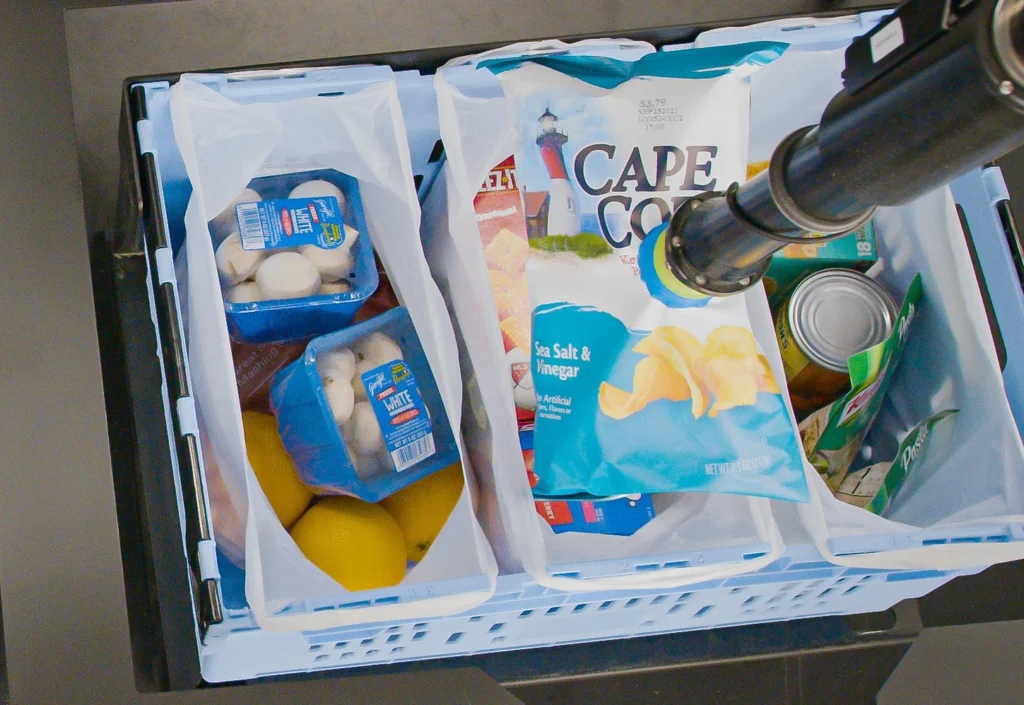
In the case of robotic picking, several robots are very good at picking the same item from the same location, and then placing it in a new, but always the same, location. However, this is often not realistic for companies in the eCommerce, supply chain, and distribution segments, making robotic picking much more difficult than robots used for picking in a manufacturing setting.
Goods come in a variety of shapes, dimensions, weights, packaging, colors, textures, reflectivity, and fragility. Picking up a round soccer ball is obviously different than picking up a bag of potato chips. Robotic systems must have intelligent software that can quickly analyze an item and determine the best location for the gripper to pick it up. This requires fast AI processing, and it also benefits when machine learning embedded in the software can improve over time from more experience with various SKUs.
Warehouses and distribution centers are not pristine environments. In the real world, bins can gather trash, extra packaging, or damaged products from the upstream handling process — such as bags that are wrinkled by electrostatics, or bags being “pillowed” by trapped air. Missing or damaged labels can also slow down the system and often require human intervention to proceed.
When a container full of goods rolls down a conveyor belt from its storage shelf, no two presentations are the same. Even after a pick is made, the presentation can change as items in the tote will often shift when another item is removed. Each pick requires that the system visualize where the next pick will occur.
Customers are often presented with machine potential pick rates that claim a robot can pick a large number of items per minute or per hour. These numbers are often created in a perfect environment, with great lighting and perfectly shaped items. Pick rates in a real world warehouse or distribution center will likely be lower than those advertised by vendors showcasing demonstrations conducted in a controlled environment — so it is important to be realistic about performance rates.
Success in robotic picking requires that companies present a realistic view of their existing operations in order to discover where automation will work best. Considerations when evaluating a system:
To replace or rethink: Are you looking to replace or convert a manual process, or rethink an existing one?
Understand your process: Are you able to insert robotic picking into an existing process by dropping it in place, or do you need to modify your process to take advantage of robotic picking?
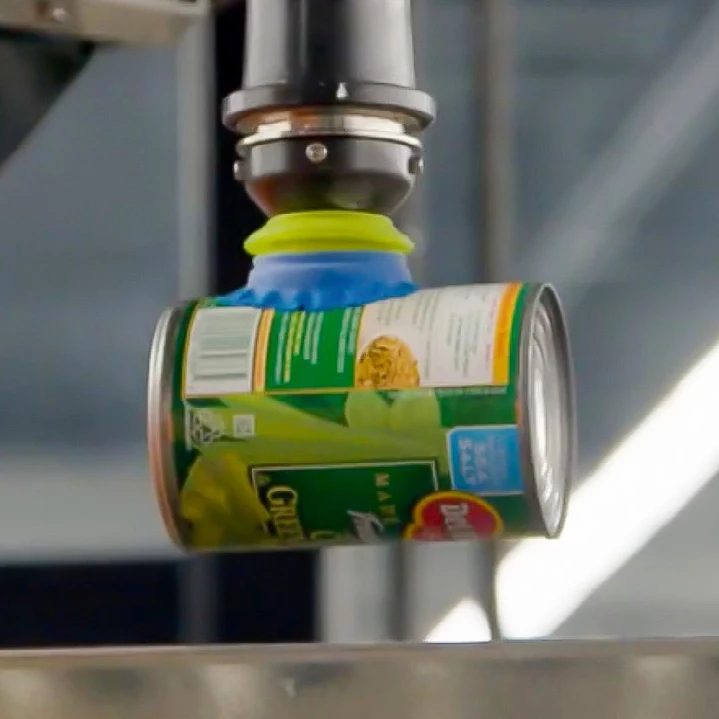
Distance of transfer: What reach radius does the physical geometry of your system need/ provide? Does the item need to travel side to side, or up and over? In the real world, the locations of pick and place areas vary greatly.
SKU mix: How many different items do you want the robot to pick? You likely won’t be able to have a robot pick everything — so you will need to separate those items to a manual picking station. Simulation of a sample product mix of different SKUs can determine whether a robotic picking solution will work for your environment, and how many manual processes will need to remain.
Picking region: Are you using totes or a conveyor belt? For example, lifting from a tote requires more time than a belt. Demos often show short totes, but real-world totes from an ASRS often use larger totes to improve capacity of items.
Cleanliness: Will totes contain trash that may affect picking times? Trash is a fact of life in production environments.
Packing requirements: Do you have items that require gentle or soft placement?Does packing require a specific packing density? A put wall, for example, is different from placing an item into a tote, which is different than placing items directly into outbound packaging.
Damage and accuracy: Do you have an acceptable damage rate, and can you trade off throughput for damage or accuracy?
Understanding the difficulties in robotic picking and answering these questions with regard to your own environment will help you be better prepared when adding robotic automation to your process. Keeping a holistic view of your entire operation will help you discover how picking can become a big part of improving the productivity of your operation.
You’ve arrived at the conclusion your company needs to adopt robotic automation for some or many of your processes. The next big step is convincing leadership to go along with this exciting transformation.
This journey can be smooth sailing, where you already have buy-in or a directive from the top telling you to get things done no matter the cost. But more likely, there will be several questions from executives across the company about exactly what a robotics automation transformation will impact. So it's important to understand the business case, the arguments in favor, and have details to back it up.
Return on investment is crucial, but the business case must include more than just that calculation. When determining ROI, the cost of implementation should be compared to the value the implementation provides. It's also important to look at the total cost of ownership (TCO) for an implementation — considering factors like facility costs, maintenance costs, and third-party software integration costs. Setting a realistic timeframe for deployment will avoid misguided expectations for the time it will take for these investments to pay back.
Your robotic automation implementation should be flexible and modular enough to adapt to changes that happen down the road. As recent events have shown, demand can become unpredictable across many industries, and the right robotic automation solution can scale and adapt to fulfill the needs of eCommerce fulfillment, general order processing, and store replenishment as business needs and customer demand changes.
A common misconception is that robotic automation will replace humans — when the reality is that robotics augment the existing workforce to complete tasks more cost-effectively while boosting productivity and elevating the type of work for humans. In many cases, introducing robotic automation will mean less time training new employees in roles that have high turnover and are difficult to fill. Robotic automation is an opportunity to relieve the workforce of tedious, repetitive work while also maintaining and exceeding production rates to successfully meet consumer demand.
Going beyond labor savings, a good robotics automation business case will show that you can meet and exceed your current service level agreements (SLAs). For example, show how you can bypass some processes to get orders through quicker, or how you can rapidly scale the operations to meet the demands of an unprecedented peak-to average ratio on the order of 10x or more.
Start with a labor model. We know that labor savings isn’t everything, but it’s still a major calculation you need. To estimate labor savings, you must understand the workflows in your current operation and have the data to back it up. It's important to know which labor savings come from worker replacement, and which come from robotic enhancement. Make sure you model the complete solution when calculating, both upstream and downstream. With an understanding of your current process and the future process that robotics automation entails, you can then calculate your labor savings. Don’t stop there. You should also calculate the time to payback (how long it takes to recover cost of investment). Decision makers will want to know the length of the project and when the company can expect to see positive returns.
Beyond spreadsheets, presentations, and video highlights, it's crucial to convey to the business that robotic automation will fundamentally transform the organization. Companies that have embraced robotic automation are setting the pace for competitors, and it’s no longer just a nice-to have technology. To compete in the coming years, robotic automation will become the price for entry — and the sooner your business realizes that, the faster you can jump start the transformation for success.
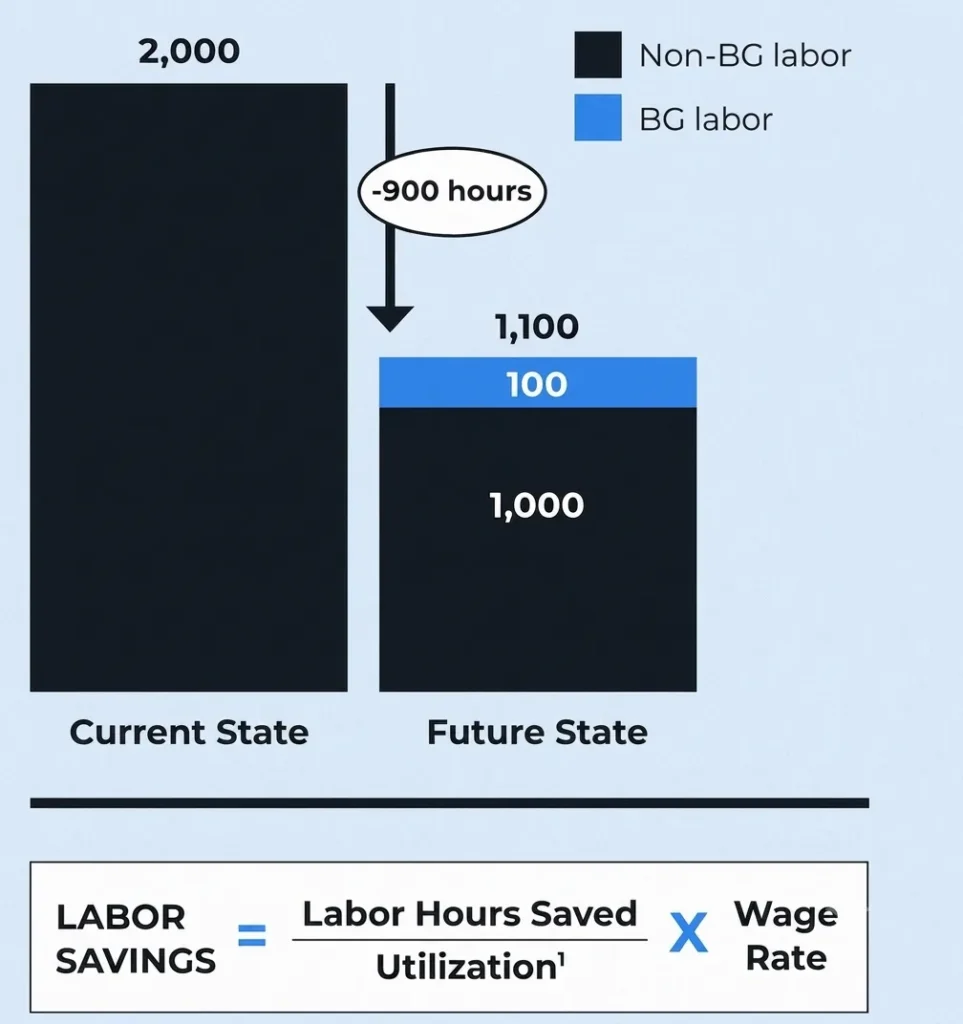
| Parameter | Value | |
|---|---|---|
| CURRENT STATE Non-BG labor | Volume per week | 1,000,000 units |
| Customer process productivity | 500 units per hour | |
| FUTURE STATE BG system labor | % volume to BG system | 40% (400,000 units) |
| BG system productivity | 800 units per hour | |
| BY system labor needs | 0.2 labor hours per hour | |
| FUTURE STATE Non-BG labor | % volume to customer process | 60% (600,000 units) |
| Customer process productivity | 600 units per hour | |