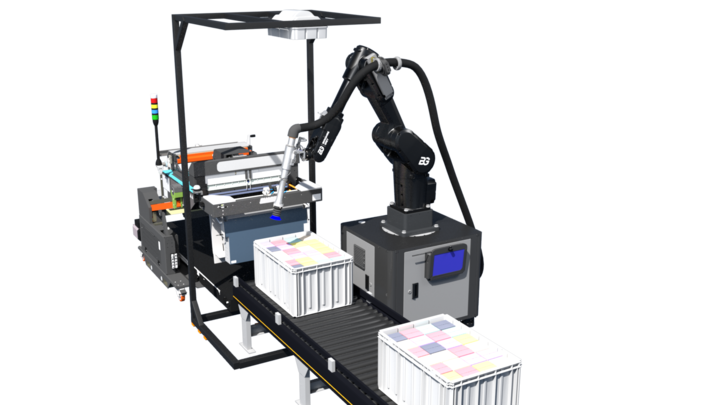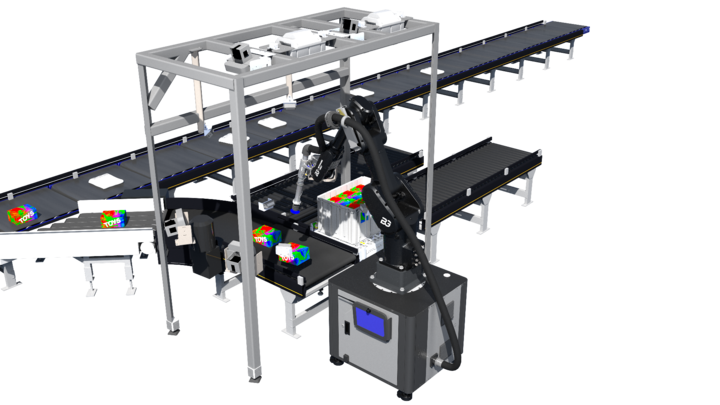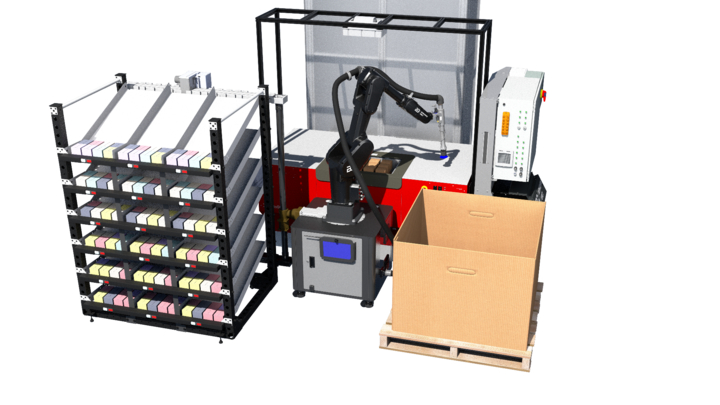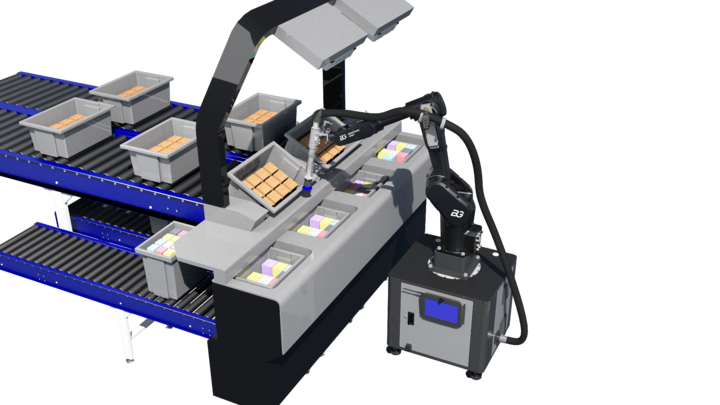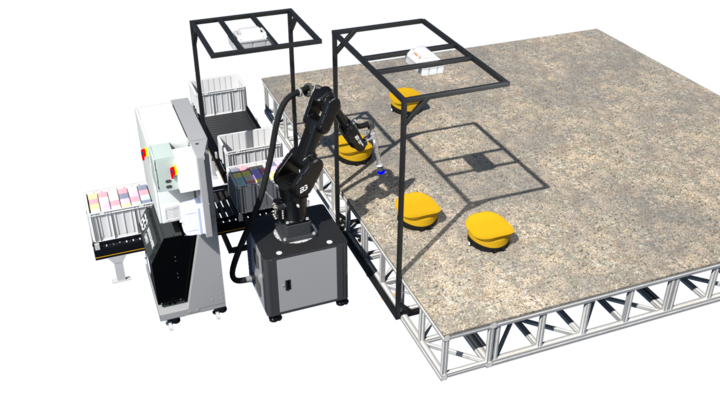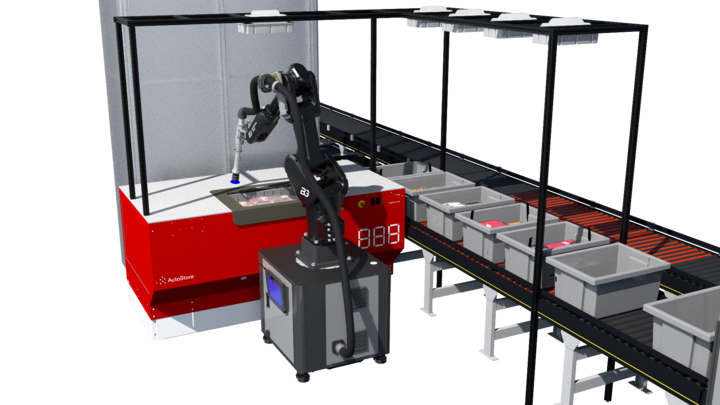

Reverse logistics automation brings software, scanning, intelligent decisioning, and physical automation into the flow of products moving back through the supply chain. It helps identify each return, determine its next move, and direct it to the right destination.
Reverse logistics begins when products return to the business and continues through outcomes such as restocking, repair, refurbishment, resale, recycling, vendor return, or disposal. Along the way, items may need to be received, sorted, graded, and assigned the right disposition.
Automation can support that process with:
These capabilities remove manual touches from the returns flow and help keep products moving efficiently through the operation.
Manual returns can quickly become difficult to control because every item may require a series of decisions before it reaches its final destination. As volume increases, those decisions can slow the flow, consume floor space, and make the operation harder to see and manage.
Returns rarely follow a single standard path. Teams may need to decide whether a product goes back to inventory, to repair, to a vendor, into liquidation, or somewhere else.
When those calls are made manually, workers must assess the condition and apply the routing rules item by item. More decisions mean more opportunities for delays, variation, and rework.
Returned products can sit between receiving, inspection, sorting, and disposition while the next step is determined.
That waiting creates staging demand. As inventory builds between steps, returns take up valuable warehouse space and can begin to interfere with other workflows.
Manual workflows can also make it harder to know where products are, what is holding them up, and how much work remains. Without clear, real-time item status, teams have less visibility into emerging bottlenecks, throughput, and processing progress across the operation.
During peak periods, each of these challenges is amplified.
More returns mean more items awaiting decisions, more pressure on labor, and greater demand for staging space. A process that feels manageable at normal volume can quickly become difficult to sustain when return activity spikes.
Reverse logistics automation moves each return through a clear sequence: identify the item, evaluate its condition, determine the right path, move it through the facility, and update the systems that track it. Berkshire Grey helps connect these physical and digital workflows so returns can move through the operation with greater speed and consistency.
The process begins when a returned item enters the facility. Barcode scanning, return authorization data, or other identification methods link the physical item to its return record and product data.
The item is then inspected and assigned a condition code or disposition status. Depending on the operation, classifications may include:
That classification drives what happens next.
Predefined routing logic uses the item’s classification and return rules to decide where it should go. A resellable product may move toward inventory, while a damaged item may be routed to repair, liquidation, or another designated area.
Once the destination is set, sortation and material-handling automation move the item through the warehouse. Berkshire Grey’s robotic automation can help direct products to the right inventory location, inspection area, vendor-return zone, repair station, or other endpoint.
As the item moves, systems such as the WMS, RMS, OMS, or ERP can exchange status and disposition data. The system records updates alongside the product’s physical movement, helping keep the reverse logistics workflow connected from receipt through resolution.
The value of reverse logistics automation shows up in how fast, accurately, and consistently returns move through the operation. By reducing manual routing and repetitive handling, we help simplify the returns flow so products keep moving without relying on the same level of human intervention at every step.
Manual returns often slow down at routing and handling points. With automation in place, items can move from inspection to their next destination with fewer pauses between steps. That can shorten the overall processing cycle and reduce the time products spend waiting for the next action.
Defined routing rules give each return a clear path based on its condition and disposition status. Instead of leaving decisions to individual interpretation, the same logic can be applied across the operation. That helps products reach the right inventory, repair, vendor-return, liquidation, or other destination more consistently.
Automation can move employees away from repetitive material handling and toward work that still depends on human judgment, such as:
That means less time spent on repetitive movement and more time focused on higher-value tasks.
The longer a sellable return sits in process, the longer it stays unavailable.
Faster disposition can return eligible products to inventory sooner. That matters most for items whose value or demand drops while they sit in staging.
Returns often take up staging space while items wait for inspection, routing, or final disposition. When products move through the process more directly, fewer of them need to sit in intermediate holding areas.
Reducing that staging burden can free up more warehouse space for other operational needs.
| Operational Area | Manual Constraint | What Automation Changes |
|---|---|---|
| Processing | Items wait between routing steps | Fewer pauses and handoffs |
| Routing | Decisions vary by worker | Defined logic directs the destination |
| Labor | Repetitive movement consumes worker time | Labor shifts to inspection and exceptions |
| Inventory | Sellable returns stay unavailable longer | Products move back toward stock sooner |
| Space | Returns build up in staging | More direct flow reduces intermediate holding |
Measuring reverse logistics automation means tracking the operational, financial, and inventory metrics that show whether returns are moving faster, costing less, and recovering more value.
For reverse logistics operations, we look at processing time, throughput, accuracy, exceptions, space utilization, labor cost, processing cost, inventory recovery, and return-to-stock timing. This helps us understand whether automation is improving the flow of returns and getting eligible inventory back into circulation sooner.
Track the day-to-day returns performance through:
Together, these metrics show how smoothly the operation is running and where friction still remains.
Operational performance should also be tied to cost and inventory outcomes:
| Metric | What to Track |
|---|---|
| Labor cost per returned item | Labor expense tied to processing each return |
| Total processing cost | Overall cost of the returns operation |
| Inventory recovery rate | Returned products recovered for inventory or another value-generating outcome |
| Return-to-stock cycle time | Time required for the eligible returned inventory to become available again |
These measures provide a practical way to evaluate results based on performance.
Implementing reverse logistics automation starts with understanding how returns move today before introducing new technology. For Berkshire Grey, that means identifying where manual work slows the process, defining how items should flow, connecting the right systems, and preparing teams to run the operation effectively.
Begin by mapping the current returns workflow from receipt through final disposition. Identify where the process slows down, backs up, or depends too heavily on manual effort.
Review:
The goal is to pinpoint where friction exists before deciding what to automate.
Document what should happen to each return category after inspection. Rules may direct products to restocking, repair, liquidation, vendor return, recycling, or disposal. Those decisions need to be clear enough for the automation system to apply them consistently using product data and condition codes.
Determine how the WMS and other relevant systems will connect to the automation layer. Our solutions can work with item data and disposition information to help ensure routing decisions reflect product attributes, condition codes, and inventory policies.
Integration planning may also include RMS, OMS, ERP, scanners, inspection stations, and other systems already supporting the returns process.
Not every return follows the standard path. Planning should account for:
Dedicated inspection or induction areas can help keep those exceptions from disrupting the broader flow.
As the process changes, employees may shift from repetitive handling to system monitoring, quality control, exception management, and troubleshooting. Training should reflect those new responsibilities.
After implementation, keep reviewing processing time, routing accuracy, exception frequency, and other performance data so the system and workflows can continue to improve.
The next move is to find where returns create the most friction and determine which parts of the process are best suited for automation.
We support manual supply chain tasks such as identifying, picking, sorting, packing, and moving products, making it easier to evaluate where automation can deliver the most value.
Talk to Berkshire Grey about your warehouse automation goals. To connect with the team, call 866-GETBG11
Answers to commonly asked questions.
Berkshire Grey applies robotic automation to repeatable handling and sortation tasks within warehouse operations. For returns, that can help reduce manual movement, improve consistency, and keep products moving efficiently after they’ve been identified and classified.
Often, but not every item, belongs in the standard flow. Damaged packaging, missing labels, loose products, or unusual shapes may need a separate induction path before automation takes over.
The WMS provides the product, inventory, and disposition data that informs downstream decisions. That connection helps keep physical product movement aligned with the system record.
Robotics can handle and sort items once they have been identified and classified. Berkshire Grey can help reduce the amount of manual movement required between key processing points.
They can be designed for higher-volume periods, but capacity is never unlimited. System configuration, induction rates, downstream destinations, and exception volume all influence how well the operation absorbs a surge.
Prioritize work that is repetitive, rules-based, and physically demanding. Those tasks are often easier to standardize and can create a strong foundation for broader automation.
Exceptions are typically diverted out of the standard path so they can be reviewed without slowing everything else down. Once resolved, they can reenter the flow or move to a separate disposition.
Suitability depends less on whether an item is a return and more on its physical characteristics and handling requirements. Size, shape, packaging, condition, and destination all matter.
Focus on whether the operation is becoming faster, more predictable, and less labor-intensive. Metrics such as throughput, cycle time, accuracy, exception rates, and inventory recovery help show that change.
Look beyond the equipment itself. A successful project also depends on process design, data quality, system connectivity, exception strategy, employee roles, and clear performance goals.
140 South Road. Bedford, MA 01730