
Resources
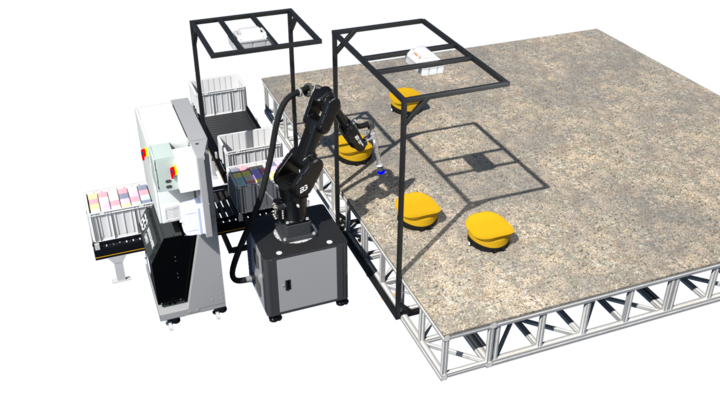
Within a warehouse, robotic picking can be deployed in several different scenarios.
The massive growth of eCommerce has been propelled by Amazon, with the company’s ability to fill orders within minutes and deliver them to houses in a matter of days, if not hours in some cases. Much of this success is attributed to robotic warehouse systems.
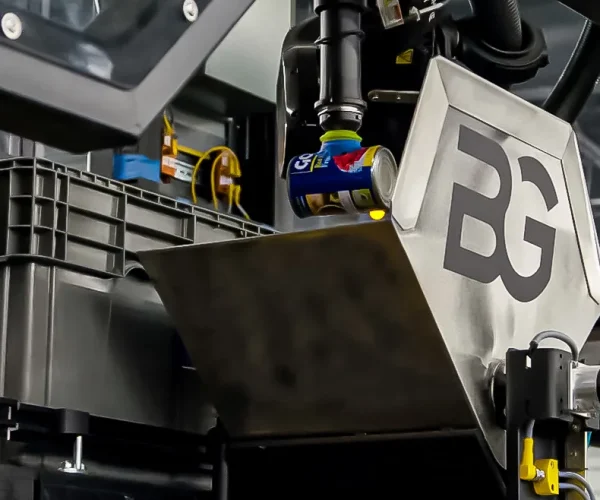
True robotic picking in the case of eCommerce fulfillment generally means a stationary robot arm that either picks items from a bin/tote that has been delivered from an upstream location (either an ASRS, another automated system, or humans loading items onto a conveyor belt), and then sorts that item into order containers to be delivered downstream.
Store replenishment involves restocking items shipped from a distribution center to replace items that have been sold at the store. In many cases, replenished items are not shipped in full cases from the distribution center, but rather warehouse workers pick individual items and inner packs (sometimes called vendor packs) into order boxes or returnable totes that are then sent to stores. This is often done to fulfill “just in time” — restocking the store with what they need to stay in-stock and avoiding overstock situations, which are costly for retailers.

At many distribution centers, replenishment is done using a manual put wall picking operation served by totes of inventory on a conveyor belt. This is very labor-intensive, especially with thousands of different SKUs. Each item must be hand-picked for the replenishment order. Multiply this by hundreds of SKUs, and multiply that by the number of store locations in a chain — and the case for robotic picking is clear.
When companies start thinking about how robots and automation can improve their picking operations, they often look at how a single robot performing picking tasks can replace a single worker doing a similar task. While in some cases this might be a good option, many of these limited scenarios don’t produce the levels of return on investment that companies are looking for when it comes to meeting demand or improving productivity.
Robotics companies have successfully communicated the benefits of adopting robots to replace manual or repetitive tasks in fulfillment operations. What’s missing in some early discussions is how the system can scale beyond an existing task or single step in a larger process.
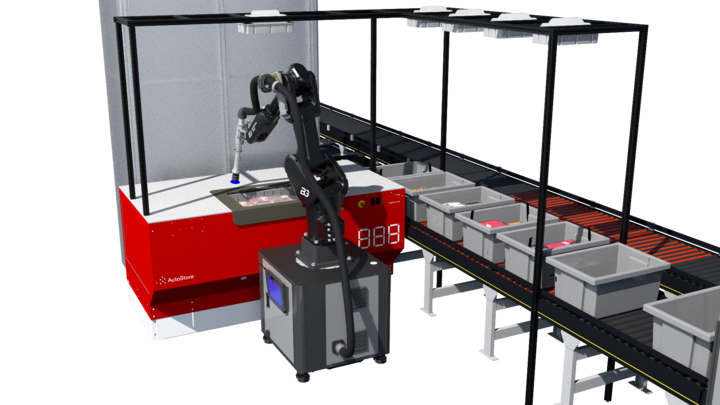
Picking to/from a conveyor: A robot arm is placed next to a conveyor belt, in which items/goods travel along the belt and the arm picks up the items and delivers them to another conveyor belt (if sorting), or into order boxes (if fulfillment).
Convert a goods-to-person station to a goods-to-robot station: A robotic pick cell is placed into/over an existing pick station designed for a person. This automates the picking, and if you are space-constrained this may be as far as you can go. However, pick stations designed for a person are not usually optimal for robots. The geometry needed for an ergonomic person station can be completely inefficient for a robot.
Inducting to unit sorters: Unit sortation systems can handle individual items that are generally too small and light to be handled by typical conveyors (such as bagged garments, pharmaceuticals, books, and other small SKUs. This can include bomb bay sorters (or flat sorters), pouch/pocket sorters, cross belt/loop sorters (short belt conveyors on a continuous loop), and tilt tray, a specific loop sorter that includes trays that can tilt to a side to deposit items onto a chute or takeaway conveyor. Robotic pickers can be placed to either induct products onto these sorters, or can be placed at the end of a sorter to pick sorted items and place them into order bins.
Complete pick, sort, and pack systems: Look at entire processes and you will find there are more valuable, more scalable, and more transformative solutions. Berkshire Grey offers a portfolio of solutions from simple pick stations to more complete systems to fit various operating scenarios and budgets.
The best way to look at how robots can benefit your particular situation is to look at the manual and semi-automated processes that utilize humans picking items and discover how that could be improved through a robotic picking system.
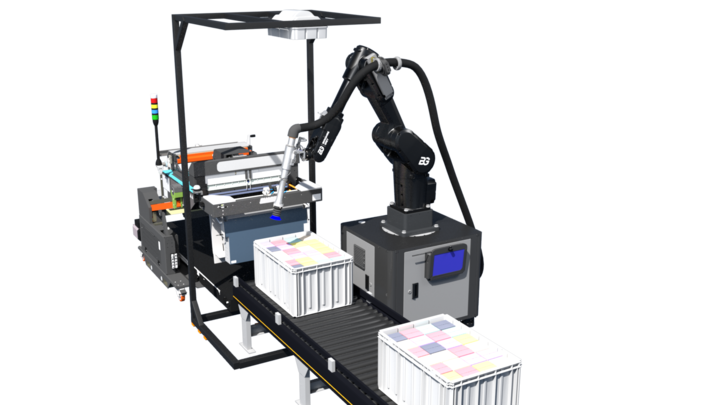
Robotic Pick Cells (BG RPC) directly interface with existing ASRS, micro-fulfillment, and conveyor-based solutions as well as Berkshire Grey mobile robots to convert goods-to-person operations into goods-to-robot operations improving accuracy and optimizing labor.
Robotic Pick & Pack (BG RPP) stations decouple picking from ASRS and micro-fulfillment solutions to pick and pack eCommerce items directly into shipping packages reducing process touches, allowing for optimal package sizes, and lowering shipping costs.
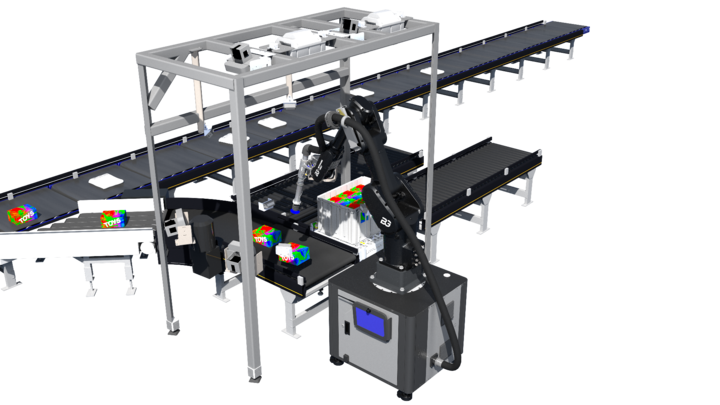
Robotic Induct Stations (BG RIS) pick and place items to traditional sortation systems, improving traditional sorter utilization and order throughput by between 25% and 50% without increasing labor.
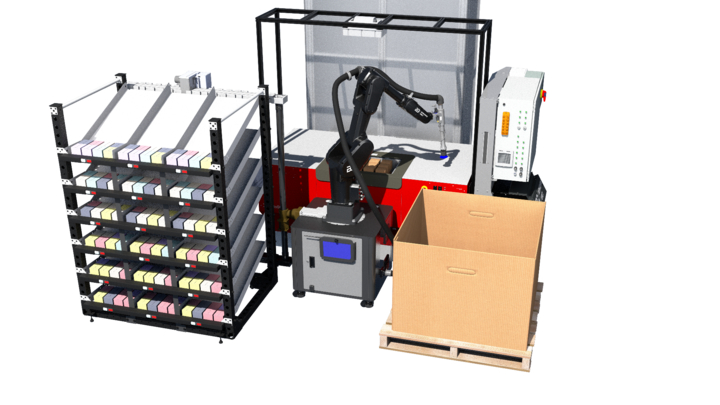
Robotic Put Walls (BG RPW) integrate with existing eCommerce fulfillment processes to sort customer orders 3X faster than manual approaches while improving upstream batch inventory picking by up to 30%.
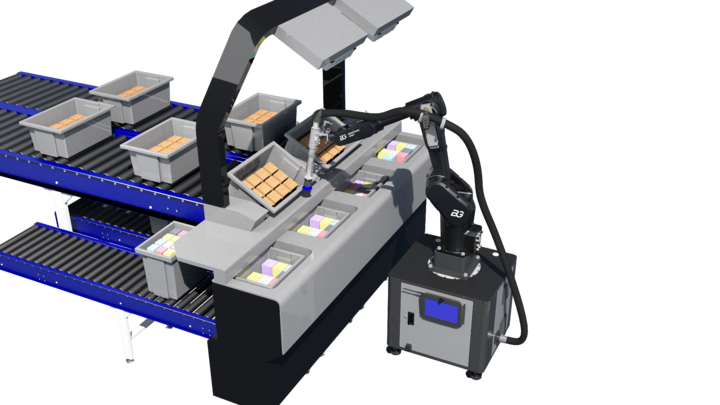
Robotic Product Sortation (BG RPS) systems currently pick tens of millions of items round-the clock for major retailers, automating break pack store replenishment and large eCommerce order selection.
Robotic Product Sortation with Identification (BG RPSi) systems sort and consolidate small packages into bags and containers enabling efficient network handling and zone skipping without adding labor.
Mobile Robotic Sortation (BG MRS) systems use orchestrated fleets of mobile robots to enable dynamic any-to-any induct to discharge sortation to deliver faster fulfillment that requires less labor.