
Resources
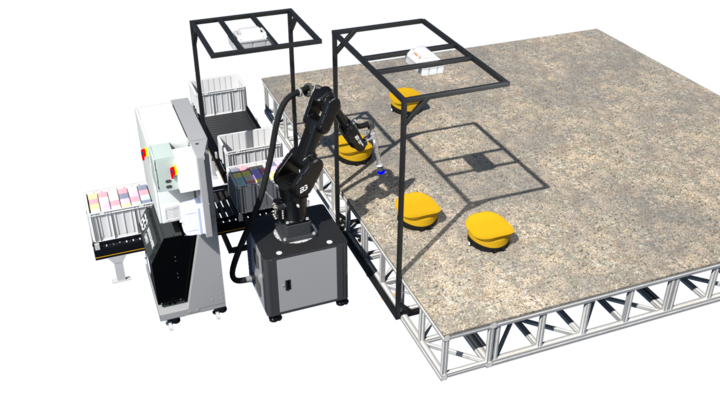
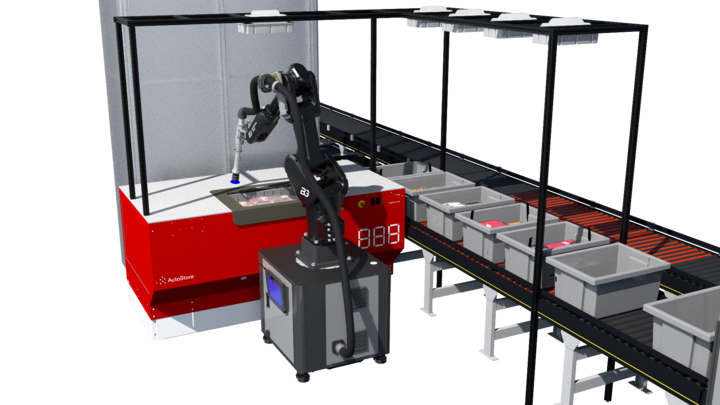
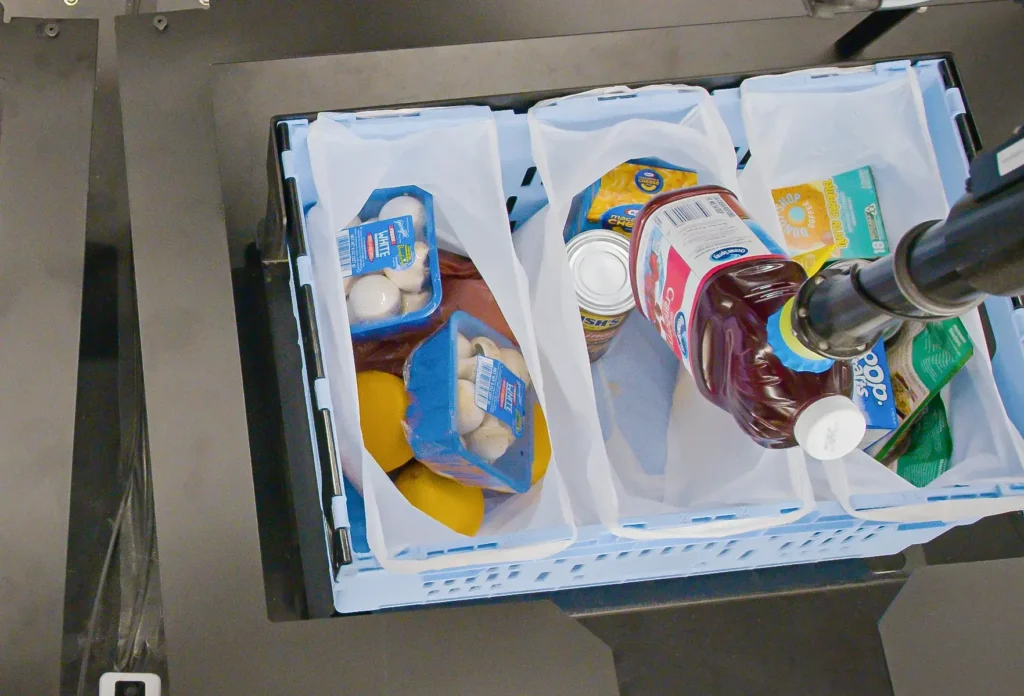
Robotic picking is much more complex that. There are several ways that robots can pick up objects, hold them, move them, sort them, and place them.
Historically, robots have been great at doing a single task quickly and repetitively by being programmed to do so. For example, automotive factory robots perform amazing tasks to help build cars because they are performing the same motion at the same spot at the same time while a car moves down the assembly line.
Similarly, a basic robot that can pick up objects stacked on a platform and then place them somewhere else needs to be sure that the objects are always in the same place. If the platform moves or the objects shift, a not-so smart robot will likely fail its task.
Before eCommerce and robots, you'd go to a grocery store and select the goods you wanted to purchase yourself, using human hands. With the rise of eCommerce over the last 25 years, more orders are being filled in warehouses and being packed in boxes to be delivered to customers’ homes and offices.
The manual process of this involves human workers walking up and down warehouse aisles to find items and move them to a packing station. In parcel delivery warehouses, packages are sorted manually for delivery by human workers. Commercial demand for better ways to improve these processes led researchers to look at robotic picking as a potential solution. But the robots had to be smarter than your average automotive industrial robot.
The development of advanced computer vision and better camera systems have led to robotic systems that allow robots to “see” where specific objects are located, allowing the robot arm to better position itself to grab the object to pick it up. This has led to additional advances in how robots can pick items up, increasing the number of different objects a robot can “pick”.
Tactile sensors have allowed robots to understand that they are holding or gripping an object. Developments in grippers have included systems that try to mimic the design of a human hand, while other end effectors utilize vacuum suction that can grasp objects more delicately.
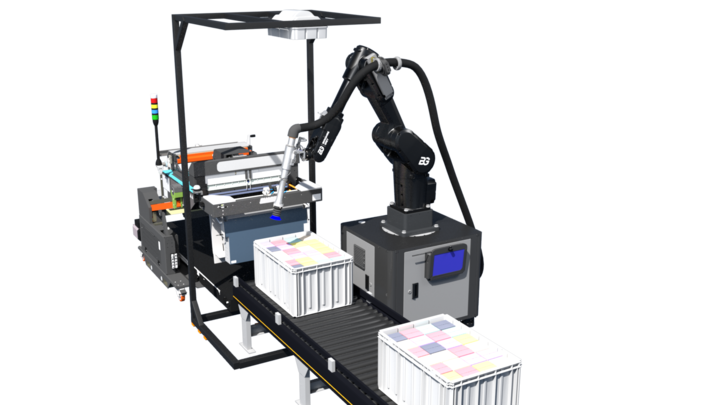
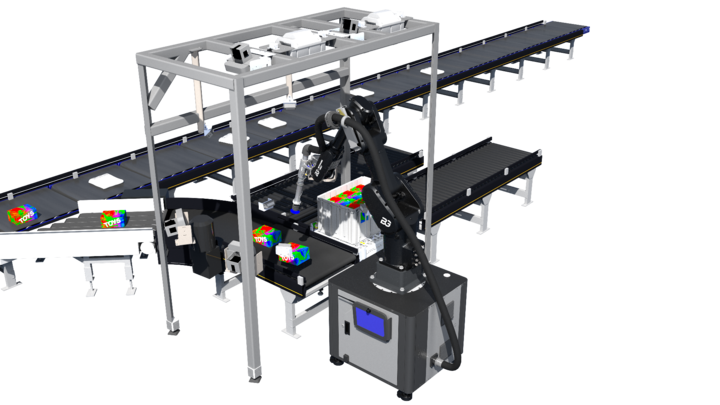
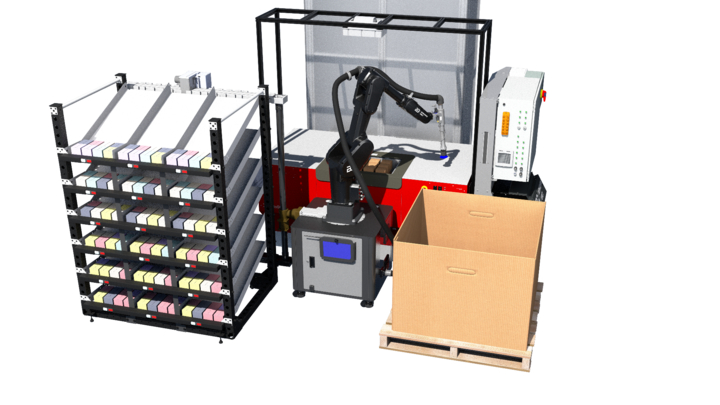
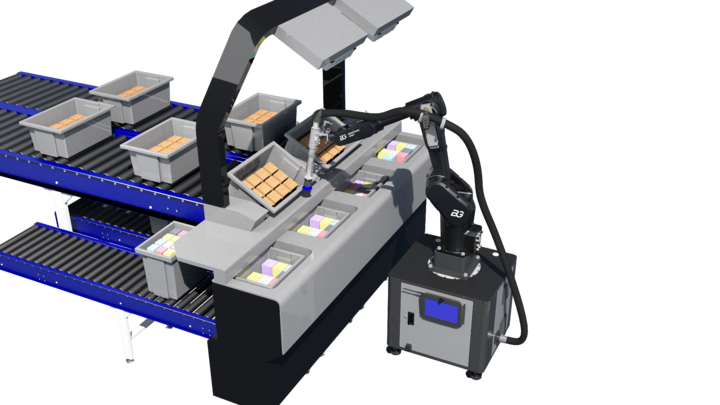
Robotic picking can have different definitions depending on how the objects are presented to the robot from an upstream workflow. For example, robotic picking can mean that a robot picks and sorts items from a conveyor belt. Or it could be a system that identifies and scans packages and sorts them into appropriate bins. If there is a manual process in which a human is repetitively looking at a bin of objects that needs to be sorted, placed or somehow separated into smaller or larger parts, chances are good that a robotic system can be created to duplicate this task.
Across several industries, companies are facing increasing consumer demand while simultaneously dealing with labor shortages, new health and safety regulations, and intensifying competition. The massive shift seen in consumer shopping behavior accelerated by COVID-19 created aftershocks that are still being felt in supply chains around the world. This is especially true in the grocery, retail, and parcel delivery segments.
Many companies are quickly adapting their businesses and accelerating their robotic automation strategies. Robotic picking is an area in which companies are quickly achieving better throughput and relief from labor scarcity by using automation for fulfillment operations.
Even before the pandemic hit, businesses saw labor shortages for specific roles within their supply chain, such as CDL drivers, mechanics, maintenance technologies, and warehouse fulfillment operators. Many of these positions were held by older workers who are retiring — and the younger generation has shown little interest in filling these roles.
Spending on groceries and retail items has shifted away from brick-and-mortar stores to online purchases. Retailers have accelerated plans for pickup options — including buy-online pickup-in-store (BOPIS), curbside pickup, and delivery. These changes have created new challenges for store fulfillment and replenishment, and also added to the number of parcel deliveries for companies like FedEx and UPS.
The warehouse of yesterday is rapidly changing. Cloud-based AI processing has enabled smarter robotic automation, while advances in gripping technology, unique mechanical designs, new vacuum sources, and innovative dynamic sensors have paved the way for robotic picking systems to sort millions of items quickly and more accurately than manual processes. Companies today must consider automation to remain competitive.
Companies around the world continue to struggle with maintaining a steady and efficient supply chain. Labor issues and manual production processes within warehouses, distribution centers, and manufacturing operations have hampered companies’ ability to deliver products, goods, and packages to customers quickly and accurately.
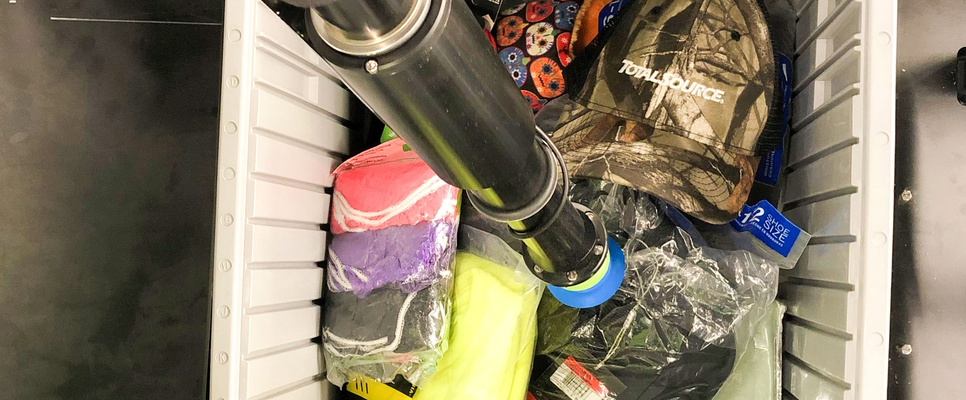
Robotic picking systems can be deployed to reduce or supplement labor-intensive processes, create capacity and throughput improvements, and boost accuracy in filling or replenishing orders for companies struggling to meet rising consumer demands.
It’s no secret that warehouse work isn't easy — it's labor intensive, repetitive, and boring. Adding to that the increased demand for faster delivery due to eCommerce shifts in customer behavior makes finding employees to fill additional positions increasingly difficult.
Robotic picking systems enable redeployment of existing labor to more value-driven tasks that take advantage of their skills — replacing monotonous tasks that often drive burnout in workers.
Every company wants to improve their throughput, and manual processes can slow down productivity. With today’s unpredictable demand spikes, there is no longer a “peak season” only around the holidays. Every day is now peak, requiring companies to drastically improve their order fulfillment throughput.
Automation is a way to improve the number of products and orders that get filled on a daily basis to keep up with increasing volume.
Mistakes made in any manual process can cost companies thousands, if not millions of dollars in wasted inventory and man hours. Sending the wrong products to stores and customers creates headaches for companies that then must deal with returns and potential lost business.
Automated picking systems can improve the quality and accuracy of orders by reducing the number of human touch points required with manual fulfillment.
Berkshire Grey systems were deployed in a store replenishment process to help a regional distribution center that served more than 100 stores operating seven days per week with two shifts per day. With Berkshire Grey automation, the customer saw a 70% reduction in labor associated with break pack replenishment picking, achieving about $1 million in savings per year in this one distribution center alone.
A global 3PL deployed Berkshire Grey Robotic Pick and Pack stations at a distribution center for replenishment operations, which enabled the company to achieve throughput of 3,500 to 4,500 orders per hour, improving item-pick volumes by 30% with the autonomous robotic system.
A 3PL for eCommerce fulfillment found that customers were routinely returning good merchandise because packaging was less than perfect. The company turned to Berkshire Grey to provide a system that autonomously picked and packed products directly to shipping packages while maintaining the highest quality standards to ensure products were delivered accurately and without damage.