In today’s fast-paced supply chain environment, integrating AI-powered
robotic automation is crucial for businesses aiming to boost efficiency,
accuracy, and scalability.
However, many companies that turn to robotic picking solutions find that the outcomes often fail to meet expectations.
Instead, they should focus on robotic fulfillment, which encompasses the
capabilities to pick, place, pack, and sort items to their final destinations
without the need for human intervention.
This service demands proven expertise in robotic picking software, hardware,
and their integration. It also requires a robotic solutions organization like
Berkshire Grey, with over a decade of experience and support from top-tier
SI partners, and our parent company, SoftBank Group.
Understanding robotic fulfillment
What is robotic fulfillment?
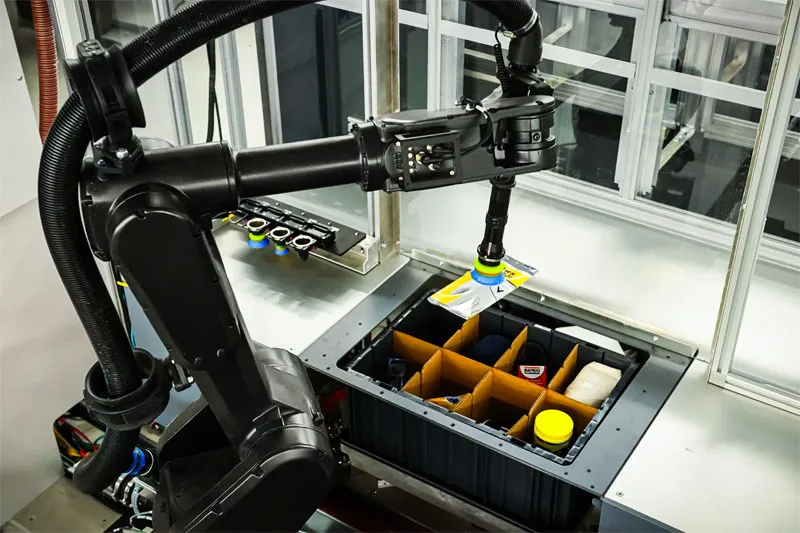
Warehouses no longer must rely strictly on human labor to fulfill orders. They can now use AI-enabled robots to do the repetitive work of picking and packing orders, allowing the humans to focus on higher-level tasks. Automation is also increasing efficiency, precision, and productivity, a trifecta in a world where next- or same-day delivery is increasingly popular.
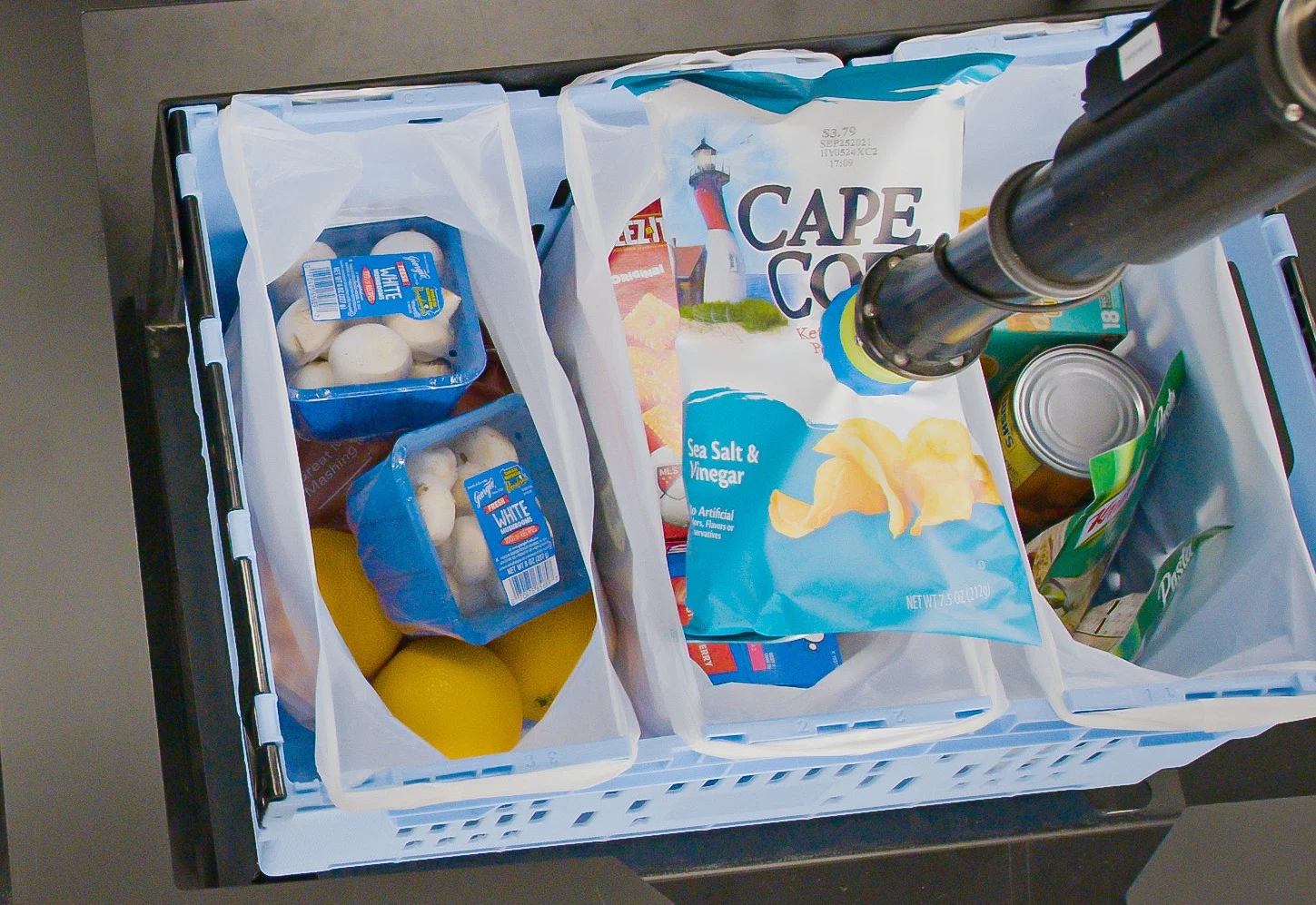
Robotic fulfillment involves the use of automated systems to perform tasks traditionally handled by human workers, such as picking, scanning, identifying, reorienting, and packing items. These systems are powered by AI and advanced hardware, offering significant advantages in terms of speed, accuracy, and reliability, particularly in situations where labor is in short supply or where rising labor costs are impacting margins.
We are often approached by companies that have piloted or implemented small scale robotic picking projects, only to be disappointed by the results. In our experience, this often happens because the project is scoped and evaluated too narrowly. Robotic fulfillment goes beyond just robotic picking; it includes picking, checking, scanning, identifying, reorienting, packing, and error handling. The goal is to automate all the tasks that workers perform in the warehouse today, eliminating the need for human supervision.
Implementing this comprehensive approach presents unique challenges. Successfully performing these tasks in real-world warehouses is difficult, where numerous issues must be effectively addressed. It involves identifying advanced robotic picking technology and utilizing multiple AI applications for continuous learning and improvement. Additionally, finding a partner dedicated to long-term success is vital, especially in an industry undergoing consolidation.
“We provide our customers with AI-enabled robotic systems. These systems use AI to learn how to improve their performance on their own, and we built them to scale to the needs of large enterprises, ensuring their security and reliability.”
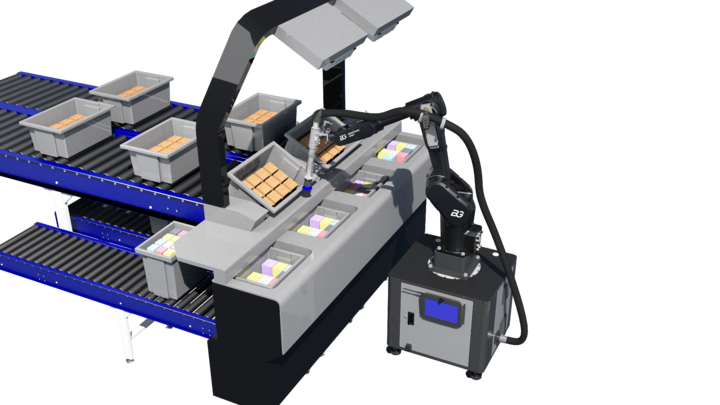
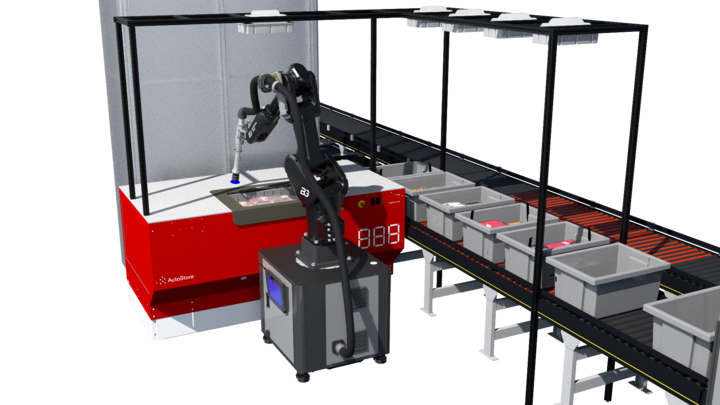
Uses a grid-based storage system
where robots pick items from bins
presented on a conveyor.
Applications: Ideal for high-density
storage environments and applications
such as bin-to-bin, bin-to-box, and
box-to-bin transfers.
Key components to look for in robotic picking systems
Selecting the right robotic automation
partner is essential. The chosen partner
must seamlessly integrate new technology
with existing systems, processes, and
infrastructure. Compatibility with the
company’s SKUs is a significant consideration,
as the robotic system must handle a wide
variety of items, including those that are
oversized, unbagged, or have irregular
surfaces. For instance, Berkshire Grey’s
technology offers close to 100% SKU coverage,
ensuring that even typically challenging
items can be efficiently picked by robots.
Safety and cybersecurity are paramount when implementing new technology. Companies must work with partners who meet the strictest IT requirements and follow industry standards to protect systems and
customer data. Berkshire Grey’s experience with Fortune 500 companies demonstrates our capability to satisfy high cybersecurity standards, ensuring robust protection against potential threats.
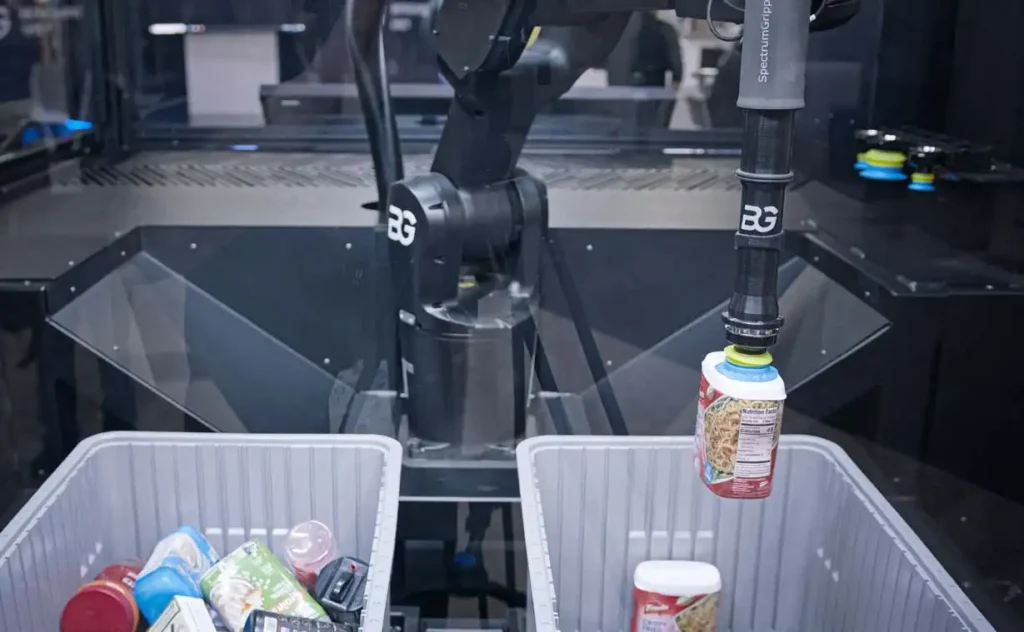
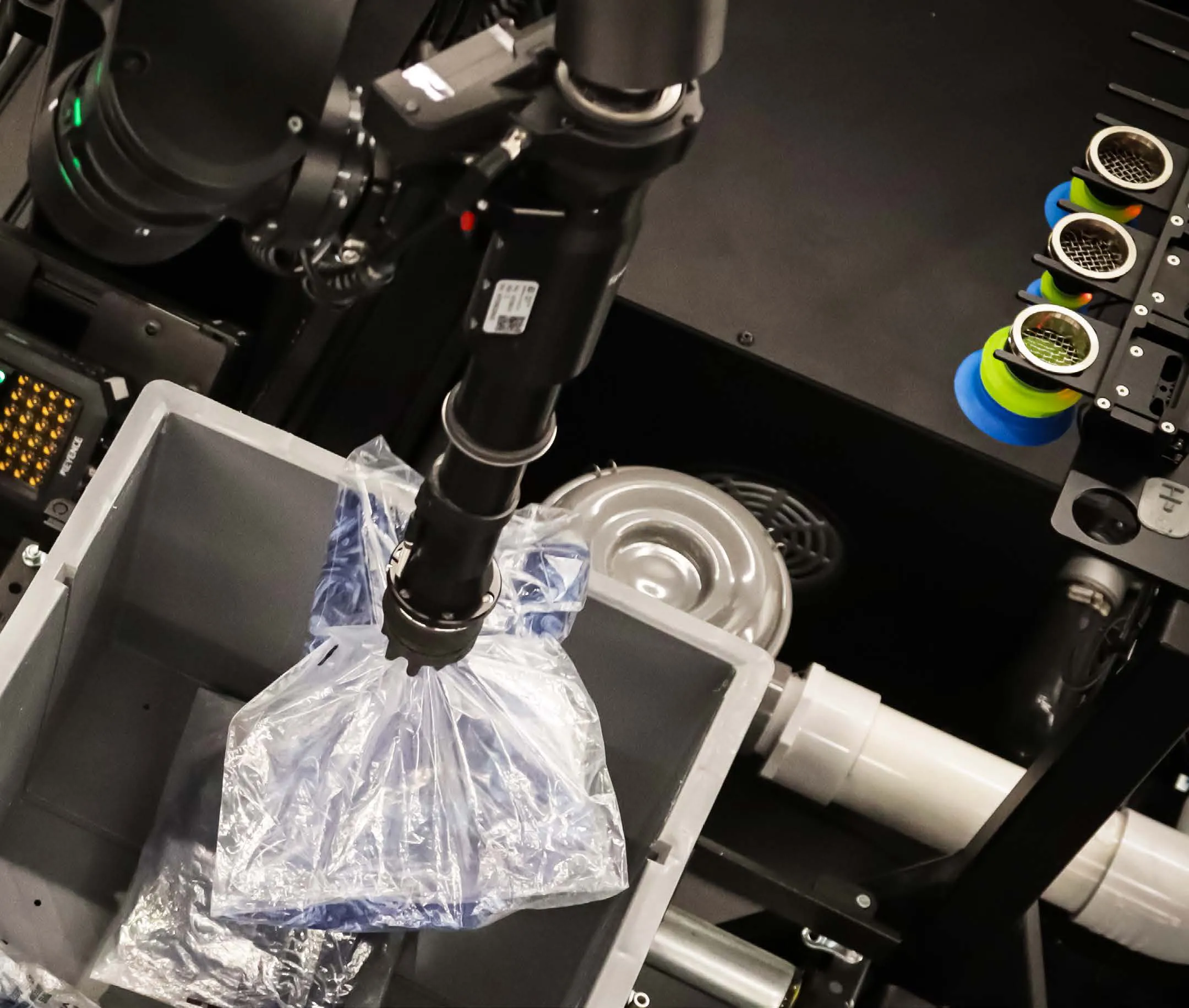
The synergy of smart robots (powered by AI) and robots designed smartly (with advanced hardware) is necessary for optimal performance. AI enables robots to adapt to irregular scenarios and continuously improve their processes. For example, Berkshire Grey’s patented SpectrumGripper® technology, combined with AI, allows robots to handle a wide range of products with precision, reducing errors and enhancing operational efficiency.
Smart Software
AI-driven software that enables the robot to learn and adapt over time, improving efficiency with each pick.
Purpose-Built Hardware
Specialized grippers and sensors designed to handle a wide variety of SKUs with precision.
Fully-Integrated Systems
Seamless integration of software and hardware to maximize performance and reliability.
Long Term Partnership
Experience and expertise, backed by top-tier partnerships and a parent company with an established footprint in the automation space.
Berkshire Grey, a wholly-owned subsidiary of SoftBank Group, brings a wealth of experience and expertise in the field of robotic fulfillment, enhancing supply chain operations with our cutting edge AI-enabled robotic solutions. With SoftBank Group holding ownership stakes in industry leaders such as AutoStore, GreenBox, and Balyo, we join forces in our shared quest for innovation and excellence.
For over a decade, we've consistently delivered leading-edge innovation and value to some of the world's biggest brands. We're proud of our global footprint that includes live deployments on three continents — with our systems executing over half a billion production picks.
Efficiency and Speed: Well-designed robotic systems can automate the same functions as human workers, with some applications capable of achieving throughputs of up to 1,200 units per hour. This translates to faster order fulfillment and improved customer satisfaction.
Accuracy: With accuracy rates as high as 99.99%, robotic picking systems leverage AI to minimize errors, reducing the need for costly rework and returns.
Scalability: Robotic systems are designed to scale with your business needs. They can handle increased volumes without the need for additional labor, making them ideal for growing enterprises.
Cost Savings: Investing in robotic picking systems can result in substantial cost savings. Typical payback periods range from 1 to 3 years, driven by reduced labor costs and enhanced workflow productivity.
Key Considerations for Choosing a Robotic Fulfillment Provider
SKU Variety and Handling
Evaluate the range of SKUs your operation handles. Systems like Berkshire Grey’s SpectrumGripper® technology are designed to manage challenging items, including porous, oversized, and unbagged products.
Throughput Requirements
Determine your throughput needs to ensure the chosen system can meet peak demand. Systems with higher throughput capabilities will be essential for high-volume operations.
Integration with Existing Systems
Consider how well the robotic system will integrate with your existing warehouse management systems (WMS) and other automation technologies.
Return on Investment (ROI)
Analyze the total cost of ownership and the expected ROI. Look for systems with proven payback periods and track records of delivering value.
Future-proofing your investment
As AI continues to evolve, its role in warehouse automation will only grow. Companies that embrace AI-enabled robotic picking now will be better prepared for an increasingly autonomous future. These businesses are already seeing the benefits of enhanced efficiency, productivity, and safety in their operations, positioning themselves ahead of the curve.
Self-Optimizing Technology
Robotic systems that incorporate AI and machine learning continuously improve their performance, ensuring long-term efficiency gains.
Enterprise Readiness
Choose solutions that are built to scale and include robust support and security features to meet enterprise-level demands.
Always Advancing
Select providers that demonstrate a commitment to innovation, ensuring your system remains at the cutting-edge of technology.
Selecting the right robotic fulfillment system is a strategic decision that can transform your supply chain operations. By understanding these key factors and leveraging the expertise of a reliable partner like Berkshire Grey, companies can successfully implement AI-enabled robotic picking systems and achieving significant competitive advantages.