

By Alex Lawrence
Traditional unit sorters have been a reliable part of distribution and fulfillment operations for decades. Tilt-tray, bombay, and cross-belt systems can deliver high throughput and consistent performance when product profiles, destinations, and volumes are relatively predictable. In the right environment, they remain an effective choice.
Today’s distribution operations are being asked to manage conditions that many traditional sorters were not designed to accommodate.
Ecommerce and omnichannel growth are creating more variable order profiles and a broader mix of items. Traditional unit sorters can process high volumes, but their fixed layouts, induction requirements, and product-handling constraints may limit SKU coverage or make it difficult to adapt as the business changes.
Store replenishment is also becoming more agile. As retailers carry leaner in-store inventories and respond more quickly to shifts in demand, distribution centers must be able to change routes, destinations, and capacity without lengthy mechanical modifications. Adding destinations or expanding a traditional sorter often requires additional conveyor, floor space, engineering, and downtime.
Labor presents another challenge. Although traditional sorters automate the movement of items to destinations, they can still require significant labor for induction, exception handling, and downstream processing. As workers become harder and more expensive to recruit and retain, supply chain leaders are examining the total labor required per unit not simply the speed of the sorter itself.
Space is under similar pressure. Many companies need to increase capacity inside existing buildings rather than expand or relocate. The fixed conveyor loops, chutes, and clearances required by traditional unit sorters can consume valuable floor space and make incremental expansion difficult.
These pressures are leading more supply chain leaders to evaluate robotic sortation alongside traditional unit sorters.
The question is not simply which system can move products faster. It is which approach best fits the operation and delivers stronger economics across labor cost per unit, throughput per square foot, SKU coverage, reliability, scalability, and long-term capital efficiency.
What Is Robotic Sortation?
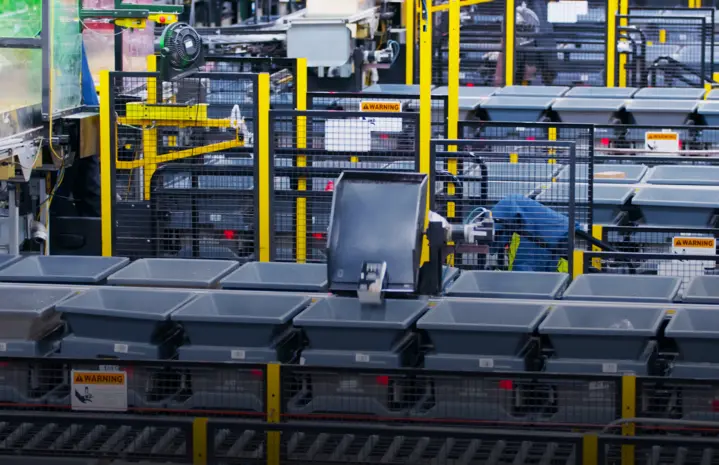
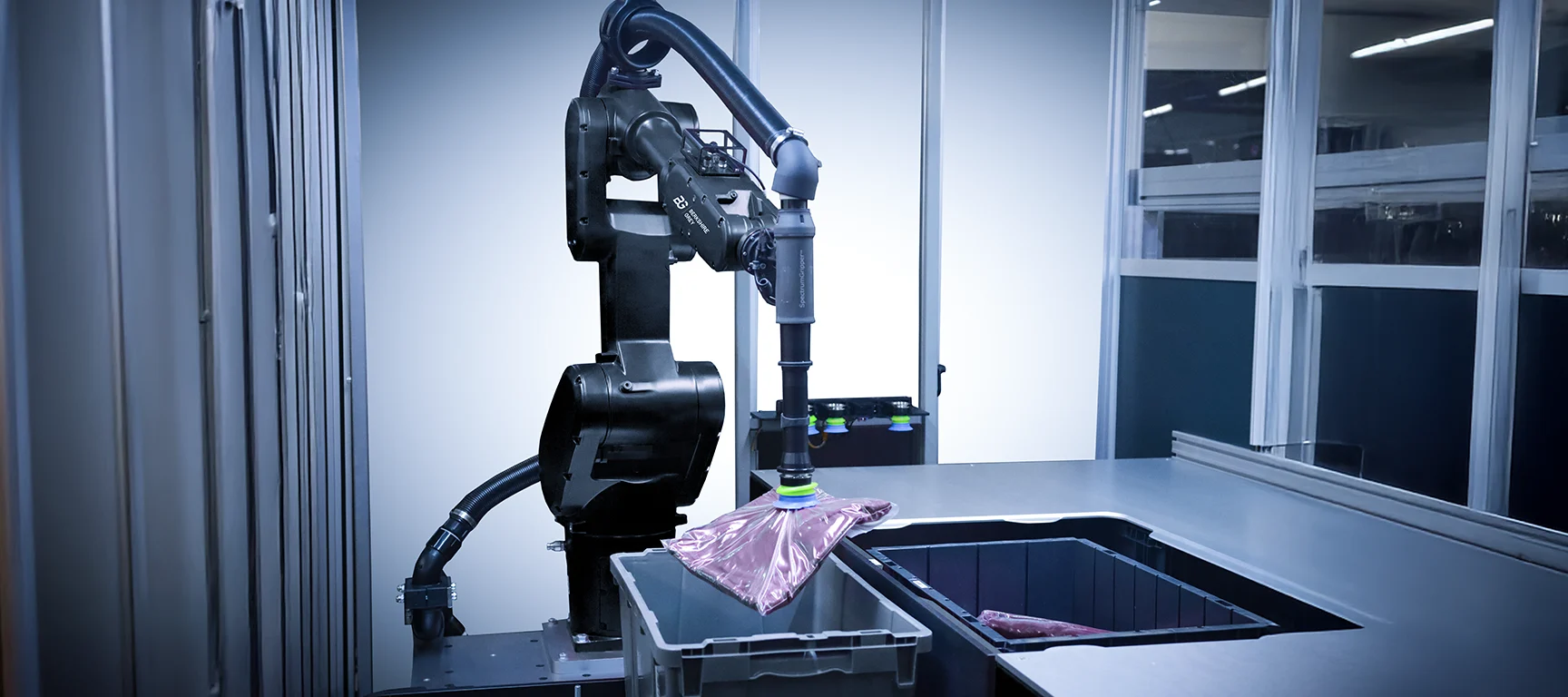
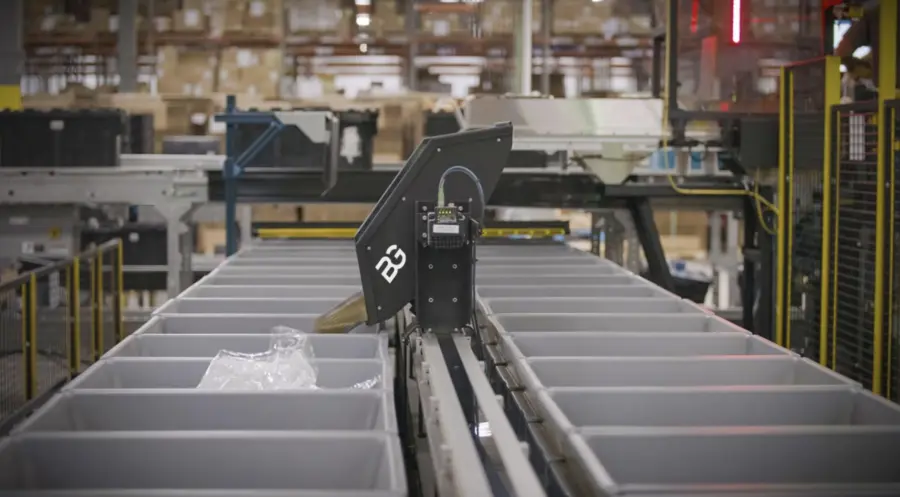
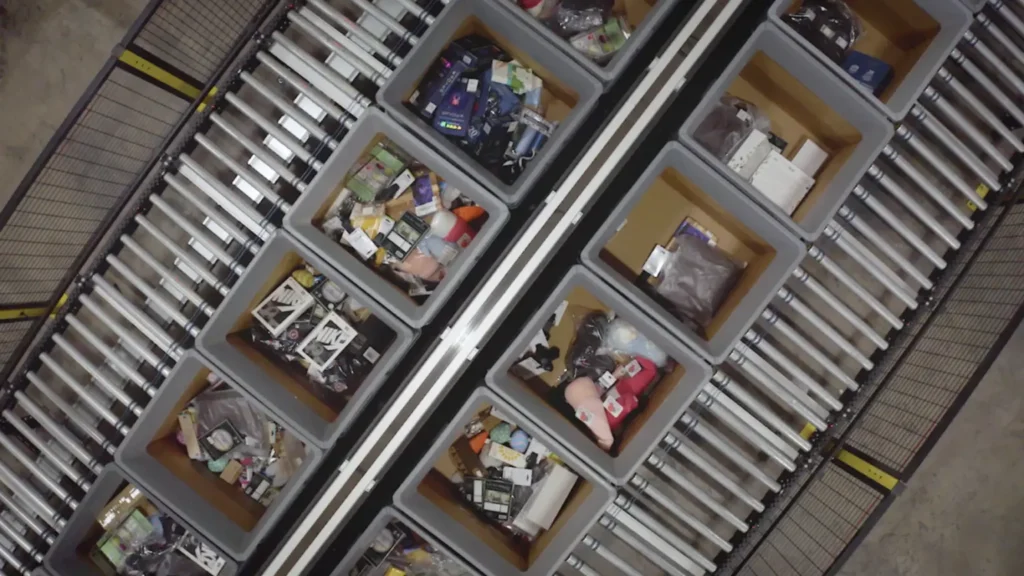
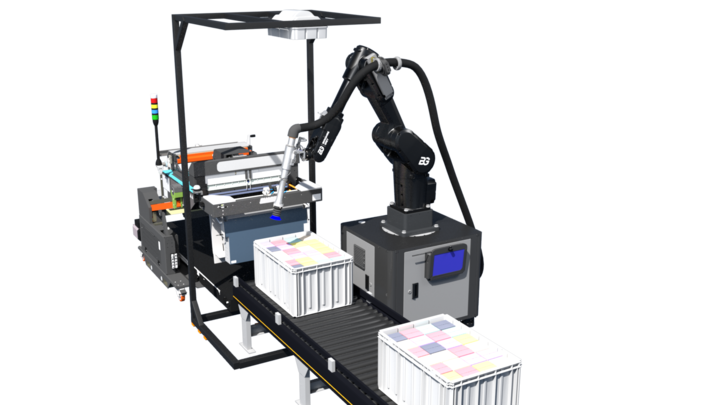
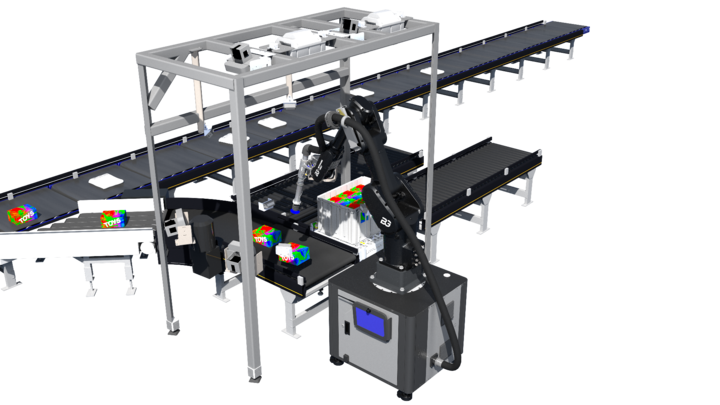
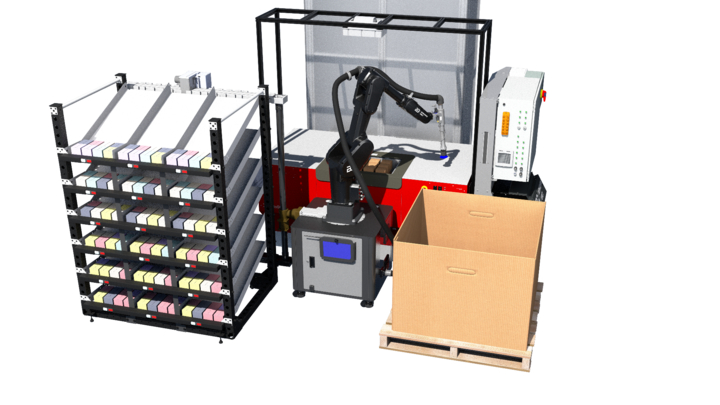
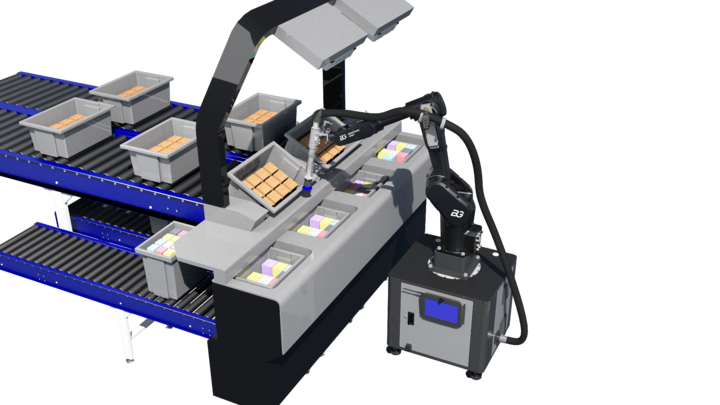
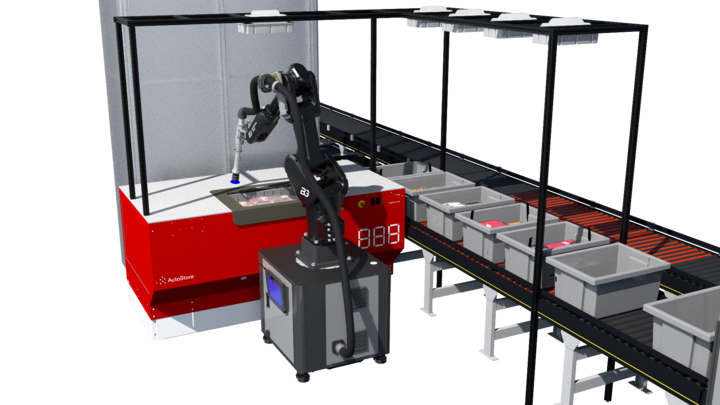
Robotic sortation is an automated warehouse sorting method that uses robotic systems, software orchestration, and destination logic to move items into the right outbound containers, totes, cases, or store destinations.
Unlike traditional unit sorters, which rely on large fixed mechanical paths, robotic sortation is typically modular. Systems can be added, expanded, or configured around existing facility constraints. In practical terms, robotic sortation helps distribution centers sort products with less manual handling, broader SKU coverage, and higher throughput density.
Why Traditional Unit Sorters Are Becoming a Constraint
Traditional unit sorters sort individual products by moving items on belts, trays, or carriers to designated destinations for packing, shipping, store replenishment, or order consolidation.
These systems can still be effective, but they can become limiting when fulfillment requirements change. Common pressure points include:
- Growing ecommerce and omnichannel volume
- More SKU variety
- More store-level variability
- Single points of failure that can disrupt the entire sortation process
- Higher labor costs and lower labor availability
- Pressure to increase capacity within existing buildings
- More demand for flexible automation instead of fixed infrastructure
A traditional unit sorter can become an operational bottleneck when it requires a large footprint, manual chute handling and takeaway, extensive exception processing, or costly maintenance and downtime.
Robotic sortation is designed to address these challenges through a modular, distributed architecture. Capacity and destinations can be added or reconfigured as operational needs change, helping companies adapt without rebuilding a fixed sorter. Because work is distributed across multiple robots, an individual robot can typically be removed from service without stopping the entire system. This reduces single-point-of-failure risk and supports higher system availability. Robotic systems can also reduce manual handling, use space more efficiently, and provide a more flexible path for increasing capacity within an existing facility.
When Companies Usually Start Comparing Options
Robotic sortation is often evaluated when one of three things is happening.
A legacy sorter is nearing end of life.
A tilt tray, bombay, or cross-belt sorter may still be running, but maintenance costs are rising, spare parts are harder to source, or downtime risk is becoming more disruptive.
The operation needs more capacity.
The business may need higher throughput or more sort destinations , but the building cannot easily support another large fixed sorter. In this case, throughput per square foot becomes one of the most important metrics.
The network is changing.
A company may be redesigning fulfillment around ecommerce, omnichannel, store replenishment, wholesale, or B2B complexity. In this scenario, sortation is not just an equipment decision. It becomes part of a broader network strategy.
Robotic Sortation vs. Traditional Unit Sorters
| Evaluation Area | Traditional Unit Sorter | Robotic Sortation |
| Footprint | Large, fixed infrastructure | Compact, modular design |
| Labor | Often requires manual chute handling, pack-out, takeaway, and exceptions | Can reduce labor requirements by up to 50% with automated takeaway and optimized induction |
| SKU coverage | May require manual exceptions for small, rolling, or oversized items | Near-100% SKU eligibility depending on product mix and system design |
| Scalability | Difficult to expand without major infrastructure changes | Systems can be added over time while operating without disruption |
| Reliability | May create a single point of failure | Distributed reliability helps maintain operation if part of the system needs service |
| Brownfield fit | Can be difficult to install in existing facilities | Designed to integrate into existing buildings, including environments such as mezzanines and irregular building columns |
| ROI drivers | Capacity continuity, but often high capital and maintenance cost | Labor savings, space savings, shipping savings, throughput density, exception reduction, and phased scalability |
Where Robotic Sortation Changes the Business Case
Robotic sortation creates value by improving several parts of the operation at once.
Labor efficiency is often the most visible driver. Traditional unit sorters can still require people around the system for induction, chute management, pack-out, takeaway, and exception handling. Robotic sortation can reduce these dependencies through automated takeaway, efficient manual induction, and optional robotic induction.
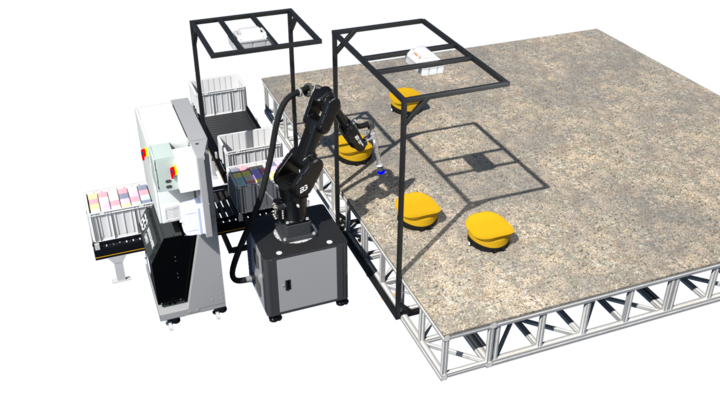
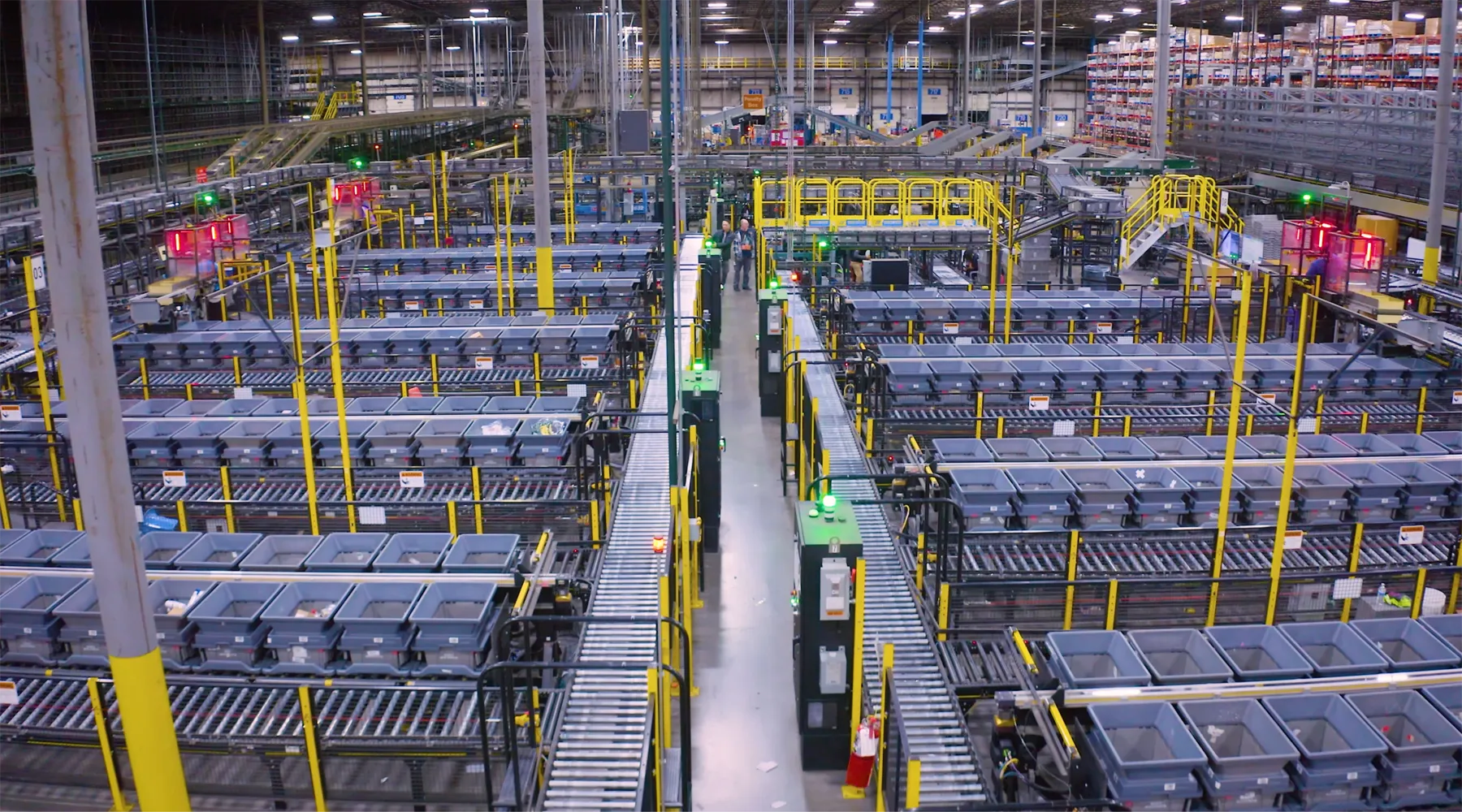
Space efficiency can be just as important. Traditional sorters often require long runs, chutes, access areas, and fixed infrastructure. Robotic sortation can deliver equivalent throughput capacity in roughly half the physical space, depending on the application. In one large-scale distribution example, 29 robotic sortation systems were integrated into an existing mezzanine and delivered approximately 4x the throughput per square foot compared with traditional solutions.
SKU eligibility can also have a major impact on labor and flow. Traditional unit sorters may struggle with small, rolling, oversized, or difficult-to-handle items. When those items fall out of the automated flow, they create manual exceptions. Robotic sortation can support near-100% SKU eligibility across a wider range of product sizes and types, depending on product mix and system design.
Scalability is another important difference. Traditional sorters often require companies to design around long-term forecasts. Robotic sortation is modular, which means systems can be added as demand grows. That can reduce the risk of overbuilding capacity before the business needs it.
Reliability matters most when volume is high and service windows are tight. Traditional unit sorters can create a single point of failure. Robotic sortation distributes work across systems, which can help keep the operation moving even if part of the system needs service.
Best-Fit Use Cases
Robotic sortation is not a universal replacement for every sorter in every facility. It is strongest where labor, space, SKU variability, and scalability are material constraints.
Store replenishment
Robotic sortation can support outbound item sortation for store replenishment. It is especially useful when store demand varies and outbound destinations are changing frequently.
Wholesale and distribution
Wholesale and distributor operations often require split-case fulfillment, sort-to-tote, sort-to-case, and accurate order consolidation. Robotic sortation can help reduce manual touches while improving flow consistency.
Ecommerce and omnichannel fulfillment
Robotic sortation is well suited for ecommerce and omnichannel operations with high lines per order, significant SKU repetition, and many outbound destinations. The value is highest when the operation needs to sort many items without adding labor or expanding the footprint.
How to Build the Business Case for Robotic Sortation
When evaluating robotic sortation, the purchase price is only one part of the decision. The stronger question is how the system changes the total cost and performance of the operation.
A strong business case should answer questions like:
- How much labor can be reduced or reassigned?
- How many more units can move through the same footprint?
- How many manual exceptions can be eliminated?
- Can the system help avoid a building expansion or major sorter replacement?
- How does it affect uptime, maintenance, transportation, and peak-season performance?
The most important metrics to review include labor hours, cost per sorted unit, throughput per square foot, SKU eligibility, manual exception rates, induction productivity, pack-out and takeaway labor, system uptime, container utilization, maintenance costs, downtime risk, and avoided expansion or replacement costs.
Together, these metrics show where robotic sortation creates the most value. For some operations, the biggest driver will be labor savings. For others, it may be space efficiency, higher throughput, fewer exceptions, or the ability to scale capacity without a major facility redesign.
What to Evaluate Before Investing
A successful robotic sortation project depends on more than the sorter itself. Leaders should evaluate the full operating model before making an investment.
Start with the operational constraint. Is the facility limited by labor, footprint, throughput, SKU variability, uptime, store count, ecommerce growth, or an aging sorter?
Then map the current cost of sortation. Document labor, maintenance, downtime, exception rates, floor space, throughput, transportation impact, overtime, and peak-season labor.
Next, evaluate the SKU and order profile. Product size, shape, packaging type, order composition, and destination complexity all affect system design.
Finally, validate the design through simulation. A strong simulation should show expected performance, labor requirements, peak flow behavior, upstream and downstream impacts, bottlenecks, expansion options, and facility fit.
Is Robotic Sortation a Strong Fit for Your Operation?
Robotic sortation is often a strong fit when an operation is running into more than one constraint at the same time. The most common signs are high labor requirements, limited floor space, frequent manual exceptions, or an aging tilt tray, bombay, or cross-belt sorter that is becoming harder to maintain.
It can also be a strong option for facilities with a large or changing SKU mix, high store count, complex order profiles, or peak-season service risk. In these environments, robotic sortation can help increase throughput without requiring a relocation, major facility expansion, or full redesign of the existing operation.
The business case is usually strongest when the facility needs to support store replenishment, ecommerce, wholesale, B2B, or omnichannel fulfillment in the same network while still maintaining flexibility for future growth.
Robotic sortation may be less compelling for operations with low volume, few sort destinations, minimal SKU variability, available labor, ample floor space, or no meaningful need to scale capacity over time.
Final Thought
Traditional unit sorters solved an important problem: how to move large volumes of items through a fixed automated path. Today’s fulfillment leaders are solving a different problem. They need to increase capacity, reduce labor dependency, support more SKU variability, and scale inside existing buildings.
Robotic sortation offers a more flexible path forward.
For organizations evaluating sorter replacement, network growth, or automation modernization, the next step is to model the operation with real data. A custom simulation can show whether robotic sortation can reduce labor, increase throughput density, improve SKU coverage, lower exception handling, and scale inside the existing facility.
That is where the decision becomes clear: not whether robotic sortation is newer, but whether it can improve cost, capacity, resilience, and risk in the specific operation you need to run.