
Picture a trailer with tightly stacked cartons toward the front, loose packages across the floor, and smaller parcels tucked between larger boxes. Should every item have to be unloaded the same way?
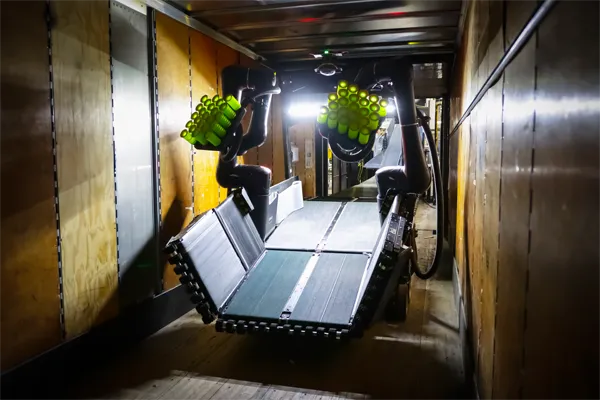
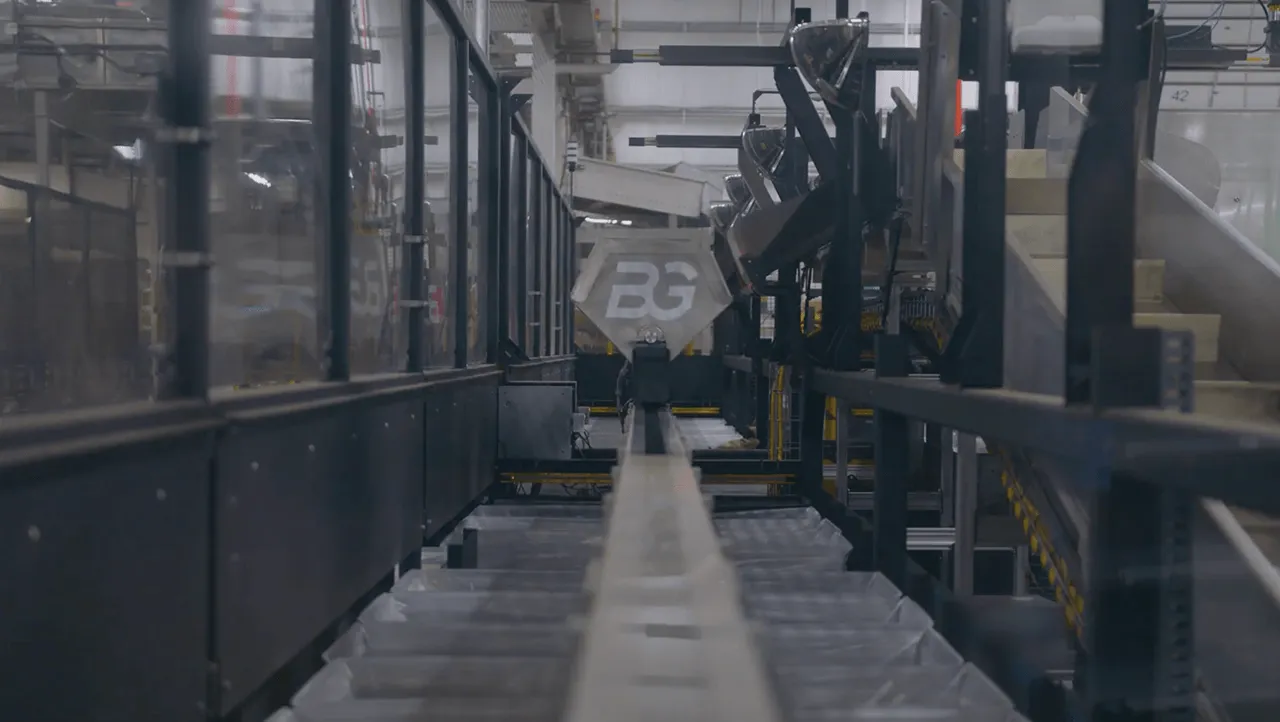
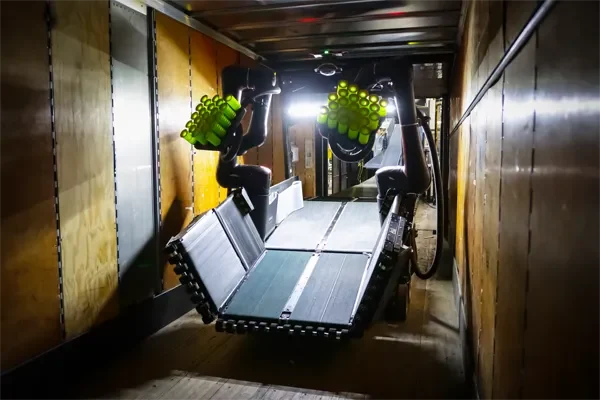
Pick-by-pick unloading treats each package as a separate task. Bulk unloading starts with a different approach: move multiple parcels together, then apply targeted robotic handling where needed. Berkshire Grey’s Scoop™ Robotic Trailer Unloader combines BG’s proprietary gripper with front roller-enabled conveyor systems to unload multiple packages simultaneously in a continuous flow.
How the Scoop system works through a trailer load
Bulk unloading goes beyond a robotic arm grabbing more packages at once. The Scoop™ Robotic Trailer Unloader combines selective picking and pulling with conveyor-enabled floor collection to move multiple parcels in a continuous flow.
Here’s how those functions fit together.
First, intelligent sensing guides the unloading approach. The system uses perception and controls to respond to the load in front of it, including dense walls, floor piles, and irregular packages. Rather than requiring everything to arrive neatly arranged, it adjusts to changing trailer conditions.
Autonomous robotic handling addresses packed sections. Dual arms manage structured and densely packed areas, while bulk conveyance handles volume. This divides the work: targeted handling where it adds value, bulk movement where individual handling is unnecessary or inefficient.
Meanwhile, floor-level induction provides another path onto the conveyor. “Induction” simply means bringing parcels into the conveying process. Multiple parcels can enter that flow without each requiring its own robotic lift-and-place cycle.
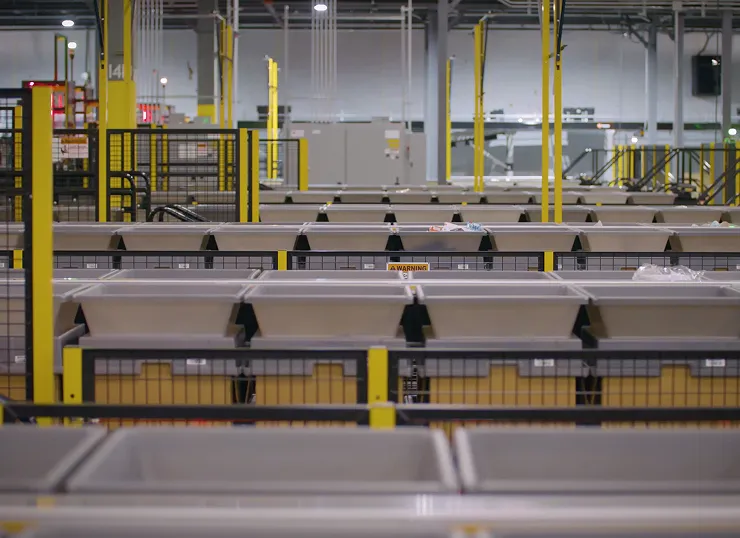
As unloading progresses, the system uses BG PilotTM AI software, sensors, and perception to coordinate movement, picking, and parcel flow, adapting its approach as the exposed load changes. That coordination extends beyond collection. The system continuously monitors packages from its induction zone through an alignment zone that smooths the flow. Packages then travel along conveyors and transfer onto the facility’s material handling equipment.
Less dependence on individual picks
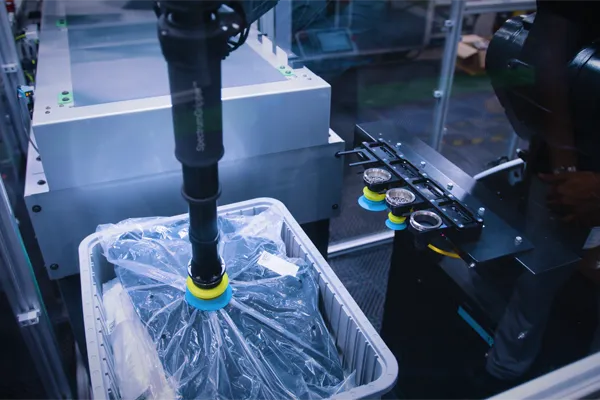
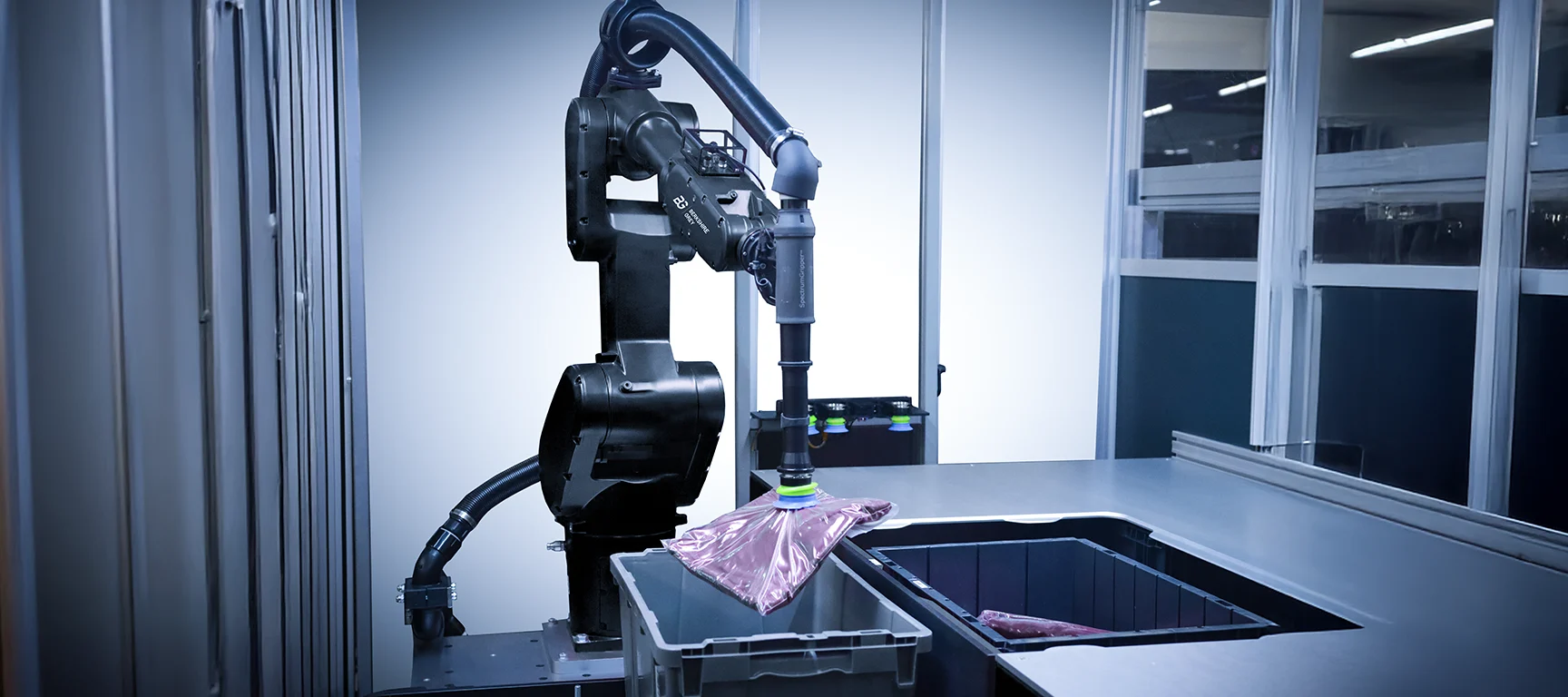
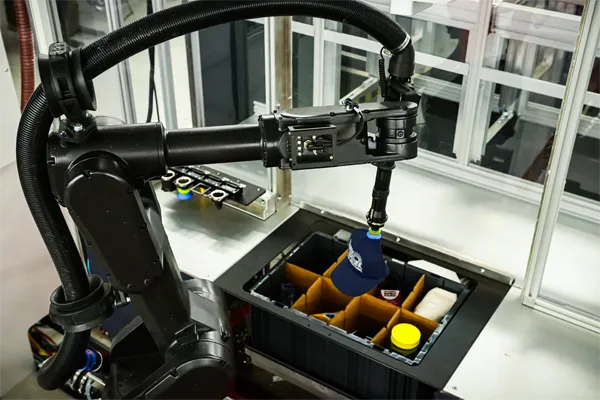
A robotic pick involves more than moving an arm quickly. Perception, gripping, motion planning, and placement all contribute to the handling process. In a strictly pick-by-pick approach, every package passes through that sequence.
Think about ten loose parcels ready for collection. Under a strictly one-at-a-time approach, those represent ten separate picks. This bulk-capable approach asks a more useful question: which of those picks can be avoided?
Bulk unloading offers a different route to productivity. The engineering advantage is not necessarily a faster arm, but less dependence on arm cycles to clear the load. Moving multiple parcels together reduces the freight that needs individual handling, while retaining selective picking for packed sections that require it. Actual performance still depends on trailer conditions and package size.
Designing for packages that need help
Keeping unloading moving also means planning for packages that need human help.
During development of the Scoop Robotic Trailer Unloader, we studied trailer unloading processes, tested concepts, and put systems into live unloading environments. We refined our designs and understanding of the variations in packages and loads from trailer to trailer.
Non-conveyable packages were a design consideration from the start. Recognizing them is only part of the challenge. The system also needs to keep them out of downstream sortation and give operators access to resolve the exception.
When the system recognizes a non-conveyable package, it alerts local operators and continues unloading while holding that package back. When an operator arrives, the system pauses and parks in a safe position so the package can be processed. There is no need to back out of the trailer to provide access.
Once the package is cleared, the system resumes autonomous unloading. At the end of the trailer, it signals the operator, exits autonomously, and returns to its park position, ready for the next trailer.
Keep precision where it earns its place
The strongest case for bulk unloading is not that robotic arms are unnecessary. It is that they should not have to do every job.
For an operation considering unloading automation, that distinction is worth watching. Look beyond the speed of a single successful grasp. Watch how much freight moves without needing one, how packages flow into downstream equipment, and what happens when an operator needs to intervene.
For high-volume unloading, the design principle is straightforward: use precision where it helps and avoid making every parcel wait for an individual pick.