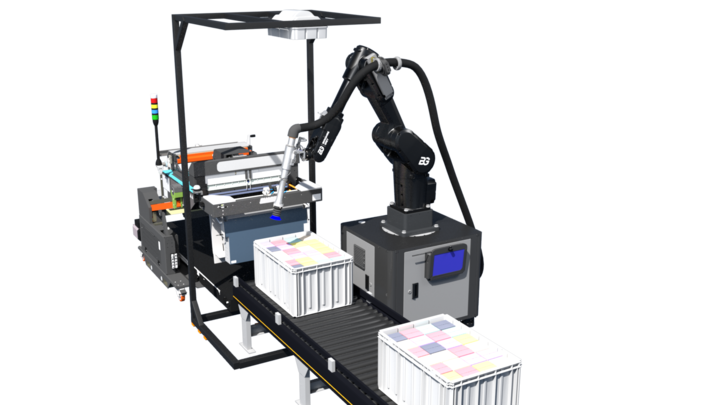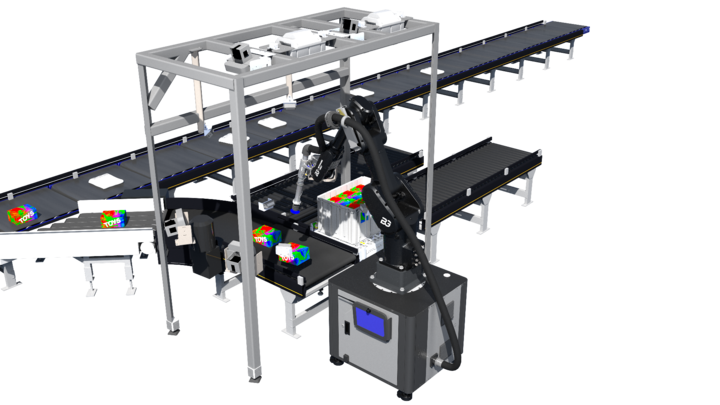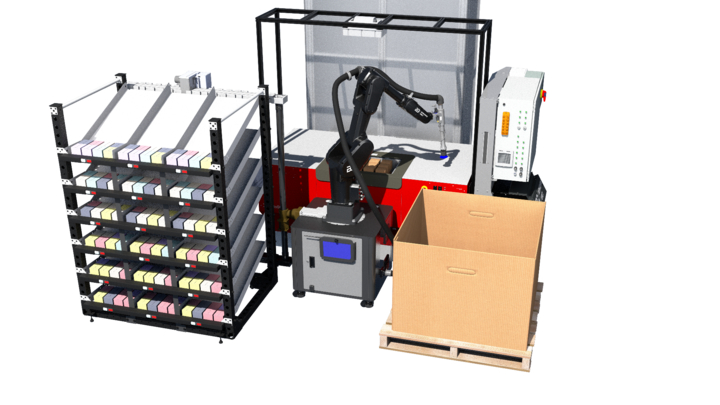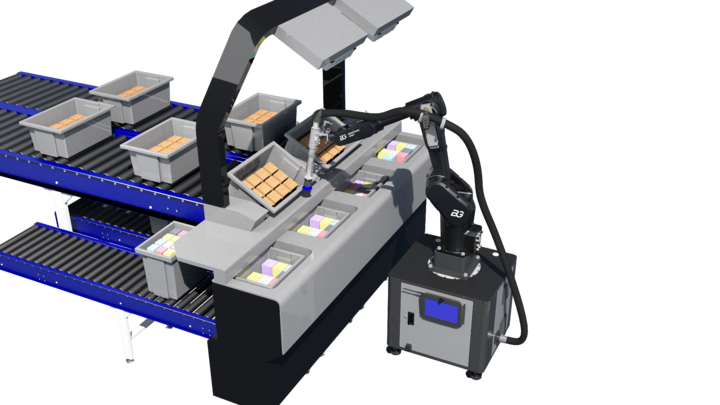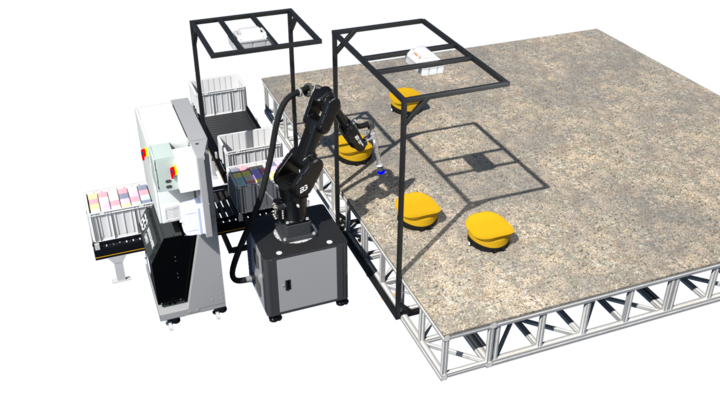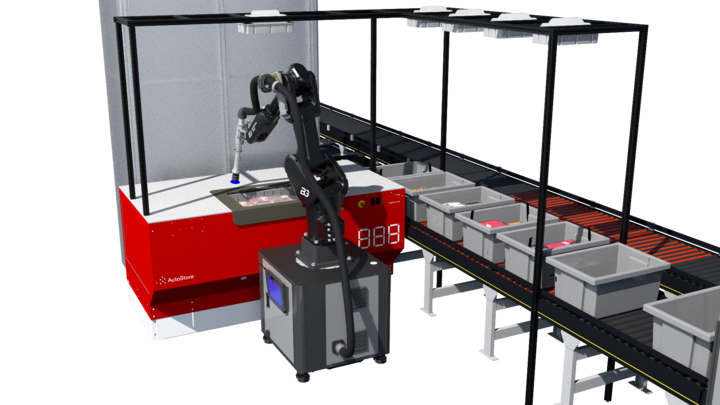

Warehouses face pressure from higher order volumes, labor-intensive workflows, tighter fulfillment expectations, accuracy demands, and limited space. Automated warehousing solutions combine physical equipment with digital systems to move, store, pick, track, and fulfill inventory efficiently and profitably.Berkshire Grey helps retailers automate difficult warehouse tasks while supporting faster fulfillment operations. Modern retail networks must move a wide range of products across channels without slowing daily throughput. Automation can reduce manual touchpoints across picking, sorting, packing, and outbound shipping. That consistency gives operators stronger capacity planning when order profiles change without warning. Retailers also need flexible systems that accommodate changing assortments and seasonal demand patterns.
Automated warehousing solutions combine hardware, software, robotics, controls, material-handling equipment, and data systems. These technologies can support inventory management, storage, picking, transportation, packing, and shipping.
Automation may involve a single conveyor or an integrated system that coordinates machines, software, and workers.
Warehouse automation is not all-or-nothing. Facilities can progress through:
This approach lets businesses automate their biggest operational constraints first.
AS/RS technologies automatically place inventory into storage and retrieve it when needed.
Traditional systems may use stacker cranes, conveyors, and computer-controlled storage locations. Key advantages include:
Cube and high-density storage systems use vertical space and compact layouts to increase capacity. Automated equipment retrieves goods, reducing employee searching, walking, and manual transport.
Conveyors use belts, rollers, or chains to move items between areas. They reduce manual carrying, create a predictable flow, and support faster fulfillment.
AGVs and AMRs move products without manual carrying. These systems may use sensors, cameras, navigation technology, and programmed or autonomous routing.
Assisted technologies include:
These systems guide workers toward the correct product and quantity while reducing search time and errors.
Warehouse robotics can select, handle, sort, and transfer products. Robotic picking and sortation are useful where repetitive handling, high order volumes, or labor constraints limit throughput.
A WMS can manage inventory, orders, labor, equipment, and visibility from a centralized platform. Warehouse execution and control systems coordinate automated equipment and workflow priorities, synchronizing physical activity with digital records.
AI, machine learning, sensors, and IoT technologies support real-time monitoring, intelligent routing, workflow optimization, equipment analysis, inventory visibility, and predictive maintenance.
Conveyors, robots, AS/RS, AMRs, and picking systems handle physical warehouse tasks. They move, store, retrieve, pick, and sort inventory with less repetitive manual handling.
Warehouse software acts as the decision layer. It maintains inventory visibility, assigns work, determines priorities, and coordinates equipment.
Physical systems execute those decisions by moving, storing, retrieving, or picking inventory as required.
A connected warehouse can automate:
Receiving → Storage → Retrieval → Picking → Sortation → Packing → Shipping
Integrated automation links information and material movement across the facility, reducing delays between processes and improving consistency.
Automation speeds product movement and order processing while reducing repetitive manual work. Warehouses can handle higher volumes without requiring labor to grow at the same rate.
Automated systems can improve:
High-density storage and automated retrieval can increase usable capacity through better use of vertical and cubic space.
Automation can reduce lifting, carrying, repetitive walking, work at height, and other demanding tasks. Machines can handle certain heavy or hazardous movements.
Evaluate:
Not every warehouse needs maximum automation. The best approach solves specific problems and matches technology to operational requirements.
Automation may require significant investment. Businesses should consider maintenance, downtime risk, technology dependence, adaptability, and changing product mixes.
Evaluate system integration, employee training, maintenance, scalability, troubleshooting resources, and vendor support.
Strong implementation planning reduces disruption and supports long-term reliability.
Businesses considering warehouse automation should identify where material movement, picking, sorting, or other repetitive processes create constraints.
Ready to explore how automation could improve your warehouse operations? Contact Berkshire Grey at +1 (833) 848-9900 to discuss material-handling challenges, automation goals, and opportunities to improve warehouse efficiency.
Answers to commonly asked questions.
They combine robotics, storage, movement, picking technologies, controls, and software to automate warehouse operations.
Receiving, storage, transportation, picking, sortation, packing, inventory management, and shipping can all be automated.
AMRs navigate more autonomously, while AGVs generally follow predefined routes or guidance systems.
An AS/RS automatically stores and retrieves inventory using computer-controlled equipment and designated storage locations.
Yes. Businesses can automate specific bottlenecks first and expand gradually as operational needs change.
It reduces repetitive searching, walking, carrying, moving, picking, and other material-handling tasks.
Yes. Integrated software, tracking, and automated handling can reduce manual errors and improve inventory visibility.
Evaluate throughput, products, space, processes, integrations, scalability, support, reliability, and expected return on investment.
140 South Road. Bedford, MA 01730