Home / Resources / Blog / Seven Ways to Fulfill More Product from Fixed Facilities and Labor (2026 update)
Seven Ways to Fulfill More Product from Fixed Facilities and Labor (2026 update)
The Role of Robotics in Warehouse Fulfillment
Warehouse robotics helps businesses manage the movement, picking, and sorting of products. In retail store replenishment, eCommerce, and B2B fulfillment, these systems can support repetitive tasks and help facilities respond to changes in order volume, product mix, and labor availability.
Automation can take several forms, from mobile robots that transport inventory to robotic arms that pick individual items. The appropriate approach depends on the work being performed, the products being handled, and the layout of the facility.
Picking and Sorting Individual Items
Individual-item fulfillment involves selecting products and grouping them into customer orders or store replenishment shipments. In break-pack operations, workers or automated systems open full cases and distribute their contents across multiple orders.
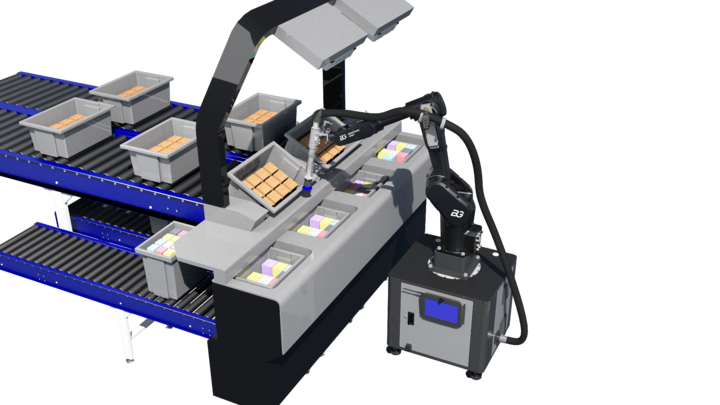
Robotic picking and sortation systems can assist with this process by identifying, handling, and directing items into designated containers. Some configurations combine robotic picking with sorting equipment, while others rely on employees to introduce products into an automated system.
Product characteristics affect how these systems perform. Size, weight, shape, packaging, and fragility all influence whether an item can be handled reliably. A facility processing uniform cartons has different requirements from one handling a mix of apparel, cosmetics, and household goods.
Connecting Storage and Fulfillment
Robotics is most useful when it fits into the broader warehouse workflow. Picking equipment, sortation systems, mobile robots, and automated storage and retrieval systems (ASRS) each perform different functions. Software coordinates the movement of inventory and orders between them.
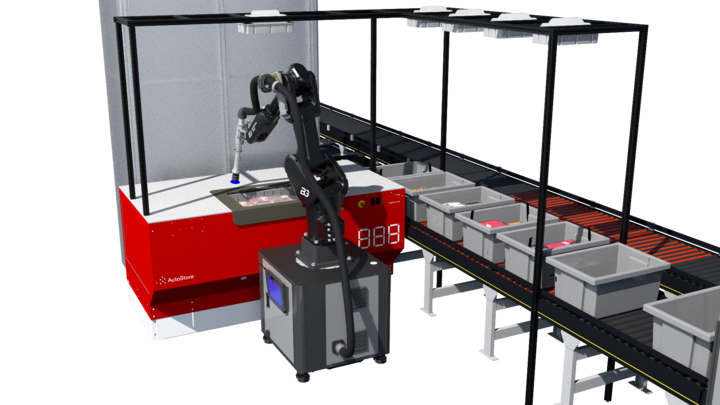
For example, an ASRS may retrieve inventory from storage, a mobile robot may transport it to a picking station, and a sortation system may direct picked items into order containers.
Connecting these steps requires attention to timing, capacity, and how exceptions are handled.
Increasing speed at one stage does not necessarily increase output across the facility. If packing or outbound shipping cannot keep pace, the bottleneck simply moves downstream.
Working Alongside Warehouse Employees
Many warehouses use a combination of manual and automated processes. Robots can take on repetitive travel, lifting, or item-handling tasks, while employees manage exceptions, replenish inventory, oversee equipment, and perform work that requires judgment or dexterity.
This division of work changes training and support requirements. Employees need clear procedures for interacting with equipment, resolving errors, and keeping operations moving when a system is unavailable.
Planning for Automation
Warehouse automation begins with understanding the operation. Order patterns, peak demand, product variety, available space, and existing infrastructure all help determine which tasks are suitable for robotics.
A modular approach can allow facilities to introduce automation in stages. Starting with a defined workflow gives teams an opportunity to assess performance and resolve integration issues before expanding.
Evaluation should extend beyond picking speed. Accuracy, equipment availability, maintenance needs, exception rates, and overall order completion time provide a more useful picture of how a system contributes to warehouse performance. The goal is a coordinated operation in which robotics, software, and employees work effectively together.
Purchasing a sortation system is a major investment that can have a lasting impact on your operation’s efficiency, productivity, and ability to scale. To make an informed decision and select the right solution for your facility, here are seven key factors you should carefully consider.
1. Can you depend on the published throughput number?
Advertised rates can be misleading because vendors may measure throughput differently. Item characteristics, order profiles, induction methods, destination availability, exceptions, and operating schedules can all affect performance.
Ask each vendor:
What does the rate count: item movements, successful diverts, completed orders, or shipped cartons?
Is it based on an ideal test hour, a sustained production hour, or a real-world shift?
Was it measured using easy-to-handle products or your actual merchandise mix?
This clarity helps prevent the business from paying for throughput that upstream operations cannot supply, downstream processes cannot absorb, or manual exception handling ultimately reduces.
2. How much of the merchandise mix can it automate?
A fast sorter creates limited value if much of the assortment still requires manual handling. Apparel, cosmetics, accessories, folded goods, small items, and irregular products can expose the limits of systems designed for uniform merchandise,and increase Total Cost of Ownership due to cumbersome manual processes. You should also think about the art of the possible – are there items which I always thought were automation ineligible that could be processed through newer sortation solutions in the market.
Test item eligibility using real SKU and order data, not a curated demonstration set. Then calculate the labor, space, and complexity required to handle everything left outside the automated process.
Broader merchandise coverage increases automated volume while reducing costly manual exception workflows. Both benefits should be included in the business case.
3. What happens when something in the Sortation System fails?
Every system will eventually experience faults or maintenance events. The important question is how much capacity remains and how quickly the operation can recover.
Ask vendors:
Can work be rerouted around an unavailable component?
Can unaffected portions of the system continue operating during maintenance?
Is there a practical bypass for priority volume?
What percentage of planned output remains during a representative failure?
Look for tested recovery procedures, comparable uptime data, repair times, spare-parts availability, and support coverage. A demonstrated recovery scenario is more valuable than a general promise of high uptime.
4. Does labor enable throughput or constrain it?
Many sorters depend heavily on people. Associates may need to induct items, monitor destinations, remove completed containers, and resolve exceptions.
If induction falls behind, the sorter is starved. If takeaway falls behind, destinations fill and product stops flowing. The equipment may remain available while actual output falls.
Evaluate labor requirements across average, peak, and degraded conditions. Include break coverage, absenteeism, training, turnover, and less favorable item mixes.
The goal is not simply to reduce headcount. It is to increase output per labor hour and reduce dependence on perfect staffing, constant walking, and precise human pacing.
5. Can capacity grow without overbuilding?
Tomorrow’s order profile will not match today’s design assumptions. Store counts, channel mix, SKU dimensions, packaging, and service expectations will change.
Determine what is required to expand the system. Can capacity be added through software, , destinations, or modules, or will growth require a rebuild and a major shutdown?
A modular system can allow the business to install the capacity it needs today and expand as demand materializes. This preserves capital and reduces the risk of buying years of forecast capacity upfront.
Physical adaptability matters too. In an existing facility, the best system may be the one that fits around columns, mezzanines, low clear heights, and other building constraints.
6. Does the business case account for the total economics of fulfillment?
Purchase price is only one part of the investment.
The financial model should also consider:
Direct and indirect labor
Manual exception handling
Packaging and carton handling
Training, overtime, and seasonal staffing
Maintenance, software, energy, spares, and support
Downtime and implementation disruption
Future expansion
Facility costs that can be delayed or avoided
Compare the total cost per completed unit or order across several demand scenarios. Test how the return changes when assumptions about volume, wages, uptime, item eligibility, or ramp speed are wrong.
The strongest investment is not always the one with the best base-case payback. It is the one that continues performing when operating conditions change.
7. Can it be integrated and deployed without disrupting service?
A sorter depends on accurate, timely instructions from warehouse and enterprise systems.
Confirm how it will exchange item, destination, priority, container, exception, and completion data with the existing technology stack.
The implementation plan should also cover software integration, site testing, training, ramp criteria, parallel operations, rollback plans, and ownership of every dependency.
This is especially important in a brownfield facility. A system that fits familiar workflows and supports a phased cutover may create more value than one with a more disruptive deployment.
Before making a decision, ask vendors to support their claims with operational data, realistic testing, clear assumptions, and demonstrated recovery scenarios. Evaluating each solution against these seven questions will help you see beyond the headline numbers and choose a system that creates measurable value under real-world conditions.
Ultimately, the best sortation investment is one that performs not only during an ideal demonstration, but every day, during peak demand, unexpected disruptions, and what comes next.
Your robotic picking demo handled the sample tote beautifully. That does not tell you whether the system will improve your operation. The real test starts after the demo: when the SKU mix changes, an exception interrupts production, a barcode scan adds seconds to every cycle, or peak volume turns a promising rate into a daily requirement.
So skip the human-versus-robot framing. The better question is whether robotic picking can multiply the productivity of the picking environment you already have without narrowing your automation opportunity to a tidy set of easy products.
For mixed-SKU fulfillment, four questions reveal far more than a headline picks-per-hour number: How much of your assortment can the system handle? How reliably can it run and recover? What throughput can it sustain for your actual task? And how quickly do those results create financial value?
But those four questions only establish operational fit. Before approving the investment, finance and technology leaders also need to know whether the business case survives a downside scenario, whether the system can be integrated and secured at scale, and whether vendor promises are written into measurable acceptance criteria.
1. SKU coverage: Can it pick the assortment you need to automate?
You may want to check SKU coverage first because a fast robotic picking system that handles only a narrow slice of inventory leaves the rest of the work and the labor planning untouched.
Mixed-SKU operations rarely get the luxury of uniform cartons. The assortment may span spark-plug-sized parts and radiator-sized components, rigid boxes and flexible packaging, cylinders, porous materials, heavy items, and new products the system has never seen before. Your evaluation set should reflect that reality, including the products everyone is tempted to leave out of the demo.
Look beyond a simple yes-or-no pick test. Ask:
Coverage today: What percentage of your current assortment can the system handle at the required quality and rate?
Adaptability: What happens when packaging, dimensions, or the SKU mix changes? Does every new product require SKU-specific programming?
Tool strategy: Can the system select or change gripping tools to match the item instead of forcing one end effector across every product?
Future coverage: Is the vendor continuously expanding what the system can pick, and how do those improvements reach systems already in production?
End effector swapping illustrates why the tradeoffs matter. A multi-tool end effector may avoid a tool-change step. A slimmer end effector with dynamic cup swapping adds that step to some cycles, but may reach tighter spaces and smaller tote subdivisions. Neither design wins in the abstract. The right choice is the one that produces the best combination of coverage and performance for your SKU mix.
2. Reliability: What happens when production stops going perfectly?
A reliable robotic picking system is not one that never encounters an exception. It is one that runs for long periods without intervention and makes the interventions it does need fast, clear, and recoverable.
Evaluate reliability through three operational questions:
How long can the system run without help? Ask for production data, not only a controlled demonstration. Understand what counts as an intervention and whether the metric includes the full cell.
How quickly can the operation recover? Find out which exceptions an operator can resolve, which require a technician, and how long recovery typically takes.
Who supports you when the easy fix is not enough? A mature lifecycle services organization, clear escalation paths, spare-parts planning, and around-the-clock support can matter as much as the robot itself, especially across multiple sites or regions.
This is also where averages can hide pain points. A respectable uptime number may still create operational disruption if the failures cluster during peak, take hours to diagnose, or require scarce technical talent. Ask to see the exception workflow from the operator’s point of view.
3. Throughput: What rate can it sustain for your actual task?
Not all throughput is created equal. Picking an item and releasing it into a large destination is a different job from scanning a barcode, orienting the product, placing it precisely, or packing it into an order container. Each additional requirement affects cycle time. Humans slow down for those steps, too.
Before comparing rate claims, define the work behind the number. Document the source and destination containers, SKU mix, tote density, required scans, placement accuracy, packing steps, exception handling, and any tool changes. Then ask the vendor to model and prove that complete process.
Peak speed is useful for understanding technical limits. Sustained throughput tells you whether the operation can hit its plan. Test performance over a representative production window, with realistic SKU transitions and the interruptions that occur in daily work.
Most importantly, measure the result at the operation level. Compare units per labor hour, staffing by shift, and total flow before and after automation—not just isolated robot cycles.
4. Time to value: Do coverage, reliability, and throughput add up financially?
Time to value is the financial outcome of the first three questions, plus the work required to insert the system into your operation.
A system with broad coverage, stable performance, and strong sustained throughput can still miss the business case if deployment requires a long shutdown, a major facility redesign, or an integration project no one scoped. Conversely, a solution that fits the existing workflow and ramps in stages may start producing measurable value sooner.
Build the time-to-value case around specifics:
How much of the current SKU volume enters the automated flow on day one?
What facility, conveyor, workstation, safety, and controls changes are required?
How will the cell exchange orders, inventory, and status data with the WMS or WES?
How long will installation, testing, operator training, and ramp-up take?
What performance assumptions drive the ROI, and how will the team validate them after go-live?
If the vendor cannot connect technical performance to these operational inputs, the ROI is still a promise, not a plan.
The executive due diligence layer most evaluations miss
A robotic picking system can pass a demonstration and still fail the investment committee. That usually happens in the gap between a technical claim and an operating assumption: a pick rate becomes an annual benefit, theoretical SKU coverage becomes day-one volume, or labor capacity becomes cash savings without a plan to remove, redeploy, or avoid the cost.
Closing that gap requires three additional reviews: financial resilience, technical resilience, and operational ownership.
The CFO question: Does the business case survive reality?
An ROI model can be mathematically correct and still be operationally fictional. Start with total cost of ownership, then pressure-test the assumptions that create the return.
The cost model should include:
Upfront costs: equipment, integration, facility and conveyor changes, controls, safety work, testing, training, and internal project labor.
Ongoing costs: software and support fees, preventive maintenance, spare parts, energy, technical staffing, cybersecurity work, and future upgrades.
Transition costs: parallel operations, ramp-related productivity loss, test inventory, travel, change orders, and deployment restrictions during peak.
End-of-life costs: component obsolescence, migration, decommissioning, and any cost to retrieve data or move to another platform.
Treat benefits with the same discipline. Labor removed, labor redeployed, avoided hiring, reduced overtime, added capacity, and improved service are all valuable, but they are not the same kind of value. A labor hour does not become cash savings unless the operating plan shows what happens to that cost.
Model at least three cases: expected, downside, and upside. Vary the inputs most likely to move the answer, like SKU coverage, sustained throughput, utilization, time to ramp, intervention rate, labor cost, volume, and support expense. Then show when cash leaves, benefits begin, the project becomes cash-positive, and how the decision looks through payback, net present value, or the company’s preferred capital metric.
The CTO question: Can we integrate, secure, recover, and scale it?
“We have an API” is not an integration plan. The technical review should show where the robotic system sits in the architecture, which platform is authoritative for each data element, and who owns the flow from order release through exception resolution.
Require clear answers in five areas:
Architecture and ownership: Which WMS, WES, ERP, controls, and identity systems are involved? Who maps the data, builds each interface, tests it, monitors it, and supports it after go-live?
Failure and recovery: What happens during a network interruption, WMS outage, bad message, unavailable robot, or partial cell failure? How are orders reconciled, and can the operation continue in a degraded or manual mode?
Cybersecurity: How are the cell and remote-support connections segmented and authenticated? What logging, patching, vulnerability management, access review, and incident-response practices are required?
Software and data governance: Which operational data, event history, and exception logs can the customer access? How are releases validated, performance regressions detected, learned behavior governed, and failed updates rolled back?
Scale and lifecycle: What changes when one cell becomes 20 or one site becomes 10? Ask about fleet management, master data, release coordination, support capacity, hardware availability, backward compatibility, and migration paths.
The goal is to know how the complete system behaves when a dependency fails and to make recovery an engineered workflow instead of an improvised one.
The operating question: What changes around the robot?
Automation rarely removes work without changing it. Someone still owns replenishment, damaged packaging, unrecognized products, exception queues, preventive maintenance, and escalation. If those responsibilities are not designed into the future-state operation, they return as hidden labor or lost throughput.
Follow the flow beyond the cell. Faster picking may expose a constraint in induction, packing, sortation, replenishment, or shipping. Test the complete operation at the shift and peak-volume level so the project removes a bottleneck instead of moving it downstream.
The rollout plan should name owners by shift, define staffing and skill requirements, document the manual fallback, and specify how operators, maintenance teams, engineers, and site leaders will be trained. It should also define who reviews performance after launch and who has authority to correct a process, software, or support problem.
What to require before you sign
This is where technical claims should become operating and commercial commitments. Before issuing approval, require:
A representative test using agreed SKUs, order profiles, containers, scans, placement requirements, and exception conditions.
Metric definitions for SKU coverage, sustained throughput, pick quality, intervention frequency, recovery time, availability, and the boundaries of the measured system.
A site-specific deployment, integration, cybersecurity, safety, training, and production-ramp plan with named owners and dependencies.
Financial scenarios based on agreed inputs, with costs, benefit categories, cash-flow timing, and downside sensitivities visible.
Written acceptance criteria, support SLAs, escalation paths, warranty terms, software and data rights, upgrade terms, performance remedies, and expansion pricing.
A post-launch measurement plan that compares actual results with the approved case and assigns ownership for closing gaps.
Finally, evaluate the partner behind the proposal. Financial stability, installed-base experience, lifecycle-services capacity, spare-parts strategy, roadmap credibility, and the ability to support every planned region affect the useful life of the investment—even when they never appear in the pick-rate slide.
How Berkshire Grey Core approaches mixed-SKU robotic picking
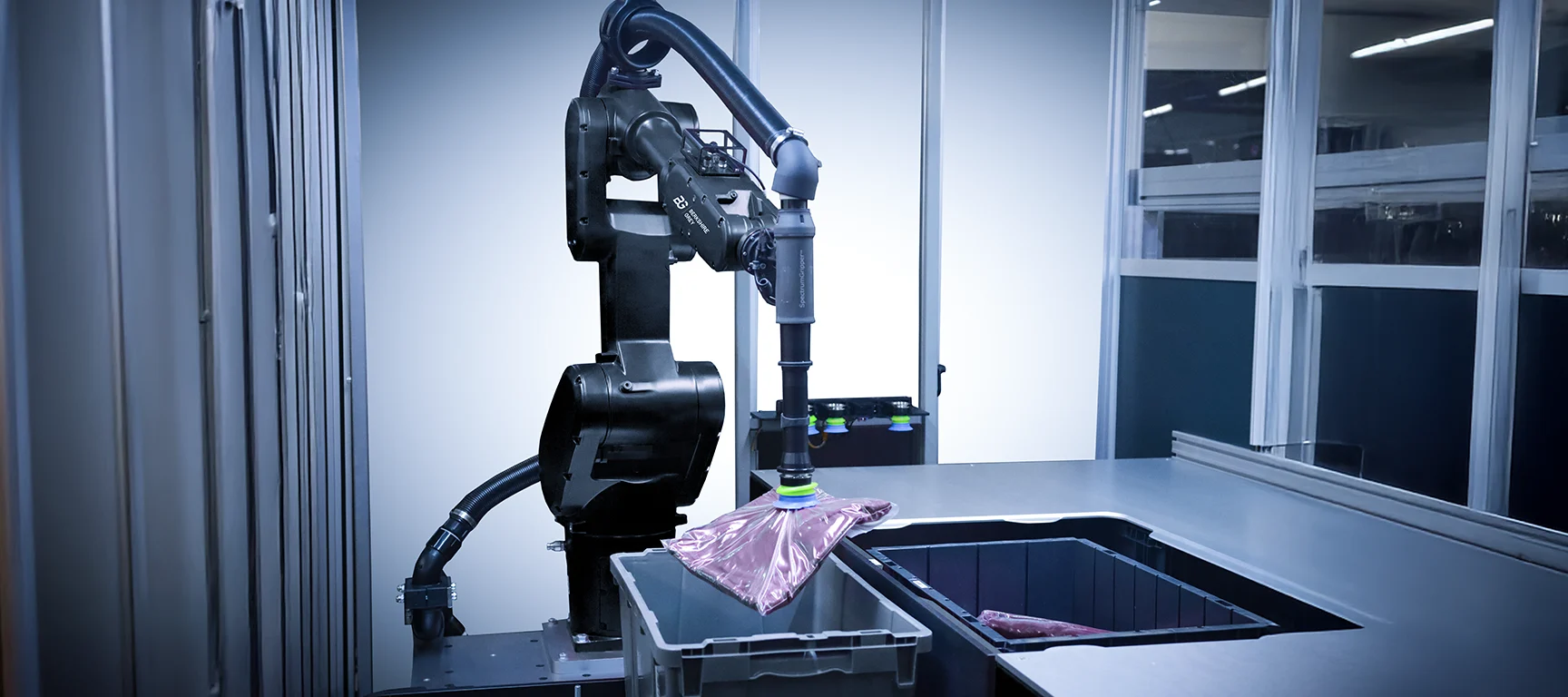
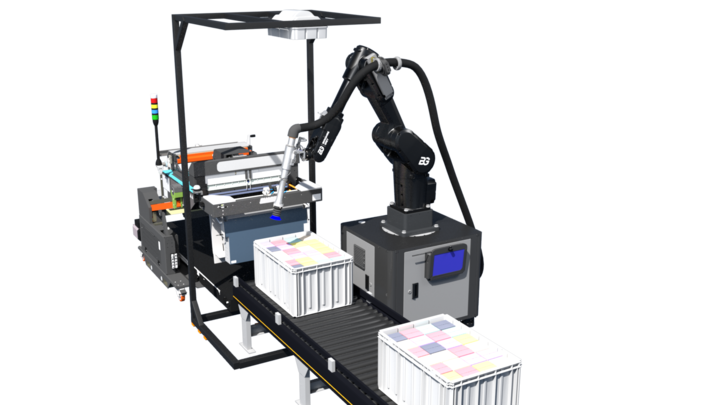
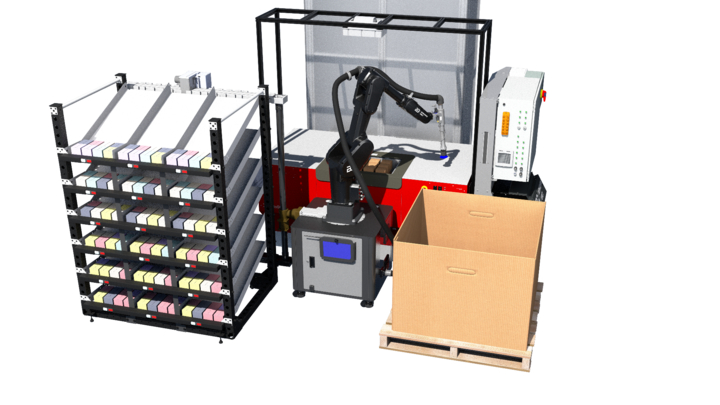
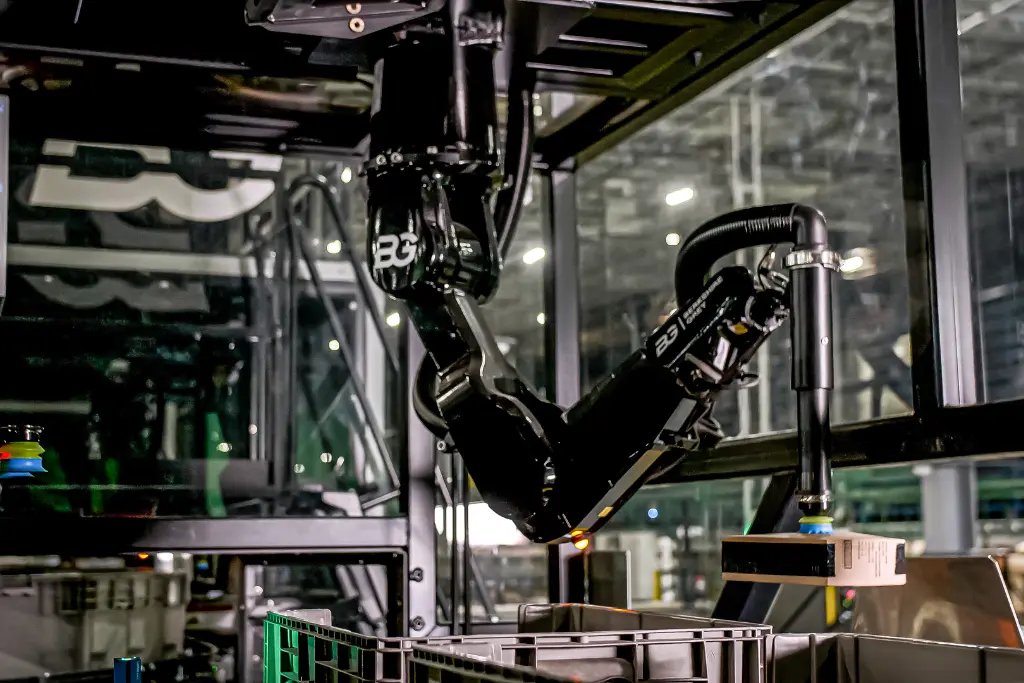
The Core™ Robotic Picking System combines perception, adaptive gripping, motion planning, and software in a vertically integrated system designed to complete the pick-and-place task across broad and changing assortments.
Core does not depend on SKU-specific programming for every product it encounters. It can select gripping strategies for unfamiliar items and build on what it learns through repeated interactions. Dynamic cup swapping lets the system use a tool suited to the next SKU while keeping the end effector slim enough to reach confined pick locations, including small tote subdivisions.
Together, these capabilities enable Core to lead on SKU eligibility. Berkshire Grey continues to push that boundary, expanding coverage as new products, packaging formats, and fulfillment requirements emerge.
That design reflects the central lesson of mixed-SKU automation: speed, coverage, and reliability have to be evaluated together. The best system is not the one with the most impressive isolated number. It is the one that expands automation coverage, fits the surrounding architecture, and sustains the performance your operation needs—with a deployment and support model that gets the value into production.
Start with your operation rather than a generic rate
If you are evaluating robotic picking, a Berkshire Grey expert can help you model coverage, throughput, integration requirements, and financial impact using your workflows and SKU mix. Request a free ROI assessment.
Traditional unit sorters have been a reliable part of distribution and fulfillment operations for decades. Tilt-tray, bombay, and cross-belt systems can deliver high throughput and consistent performance when product profiles, destinations, and volumes are relatively predictable. In the right environment, they remain an effective choice.
Today’s distribution operations are being asked to manage conditions that many traditional sorters were not designed to accommodate.
Ecommerce and omnichannel growth are creating more variable order profiles and a broader mix of items. Traditional unit sorters can process high volumes, but their fixed layouts, induction requirements, and product-handling constraints may limit SKU coverage or make it difficult to adapt as the business changes.
Store replenishment is also becoming more agile. As retailers carry leaner in-store inventories and respond more quickly to shifts in demand, distribution centers must be able to change routes, destinations, and capacity without lengthy mechanical modifications. Adding destinations or expanding a traditional sorter often requires additional conveyor, floor space, engineering, and downtime.
Labor presents another challenge. Although traditional sorters automate the movement of items to destinations, they can still require significant labor for induction, exception handling, and downstream processing. As workers become harder and more expensive to recruit and retain, supply chain leaders are examining the total labor required per unit not simply the speed of the sorter itself.
Space is under similar pressure. Many companies need to increase capacity inside existing buildings rather than expand or relocate. The fixed conveyor loops, chutes, and clearances required by traditional unit sorters can consume valuable floor space and make incremental expansion difficult.
These pressures are leading more supply chain leaders to evaluate robotic sortation alongside traditional unit sorters.
The question is not simply which system can move products faster. It is which approach best fits the operation and delivers stronger economics across labor cost per unit, throughput per square foot, SKU coverage, reliability, scalability, and long-term capital efficiency.
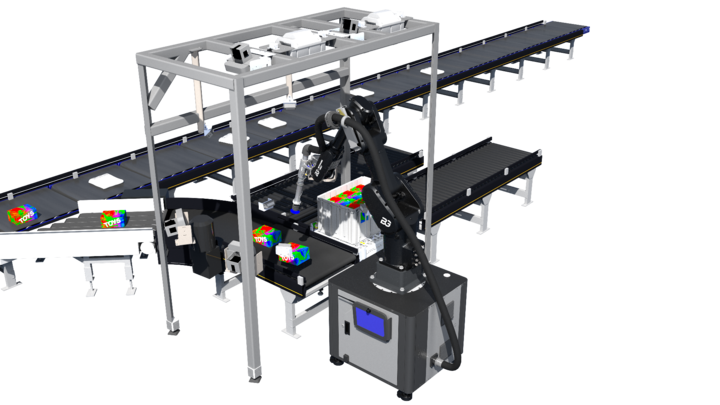
Robotic sortation is an automated warehouse sorting method that uses robotic systems, software orchestration, and destination logic to move items into the right outbound containers, totes, cases, or store destinations.
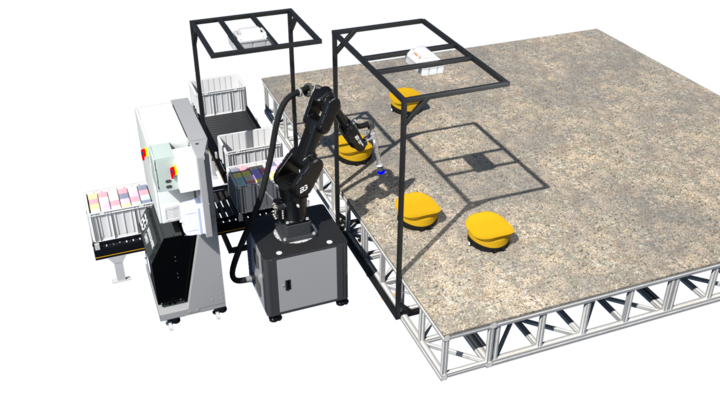
Unlike traditional unit sorters, which rely on large fixed mechanical paths, robotic sortation is typically modular. Systems can be added, expanded, or configured around existing facility constraints. In practical terms, robotic sortation helps distribution centers sort products with less manual handling, broader SKU coverage, and higher throughput density.
Why Traditional Unit Sorters Are Becoming a Constraint
Traditional unit sorters sort individual products by moving items on belts, trays, or carriers to designated destinations for packing, shipping, store replenishment, or order consolidation.
These systems can still be effective, but they can become limiting when fulfillment requirements change. Common pressure points include:
Single points of failure that can disrupt the entire sortation process
Higher labor costs and lower labor availability
Pressure to increase capacity within existing buildings
More demand for flexible automation instead of fixed infrastructure
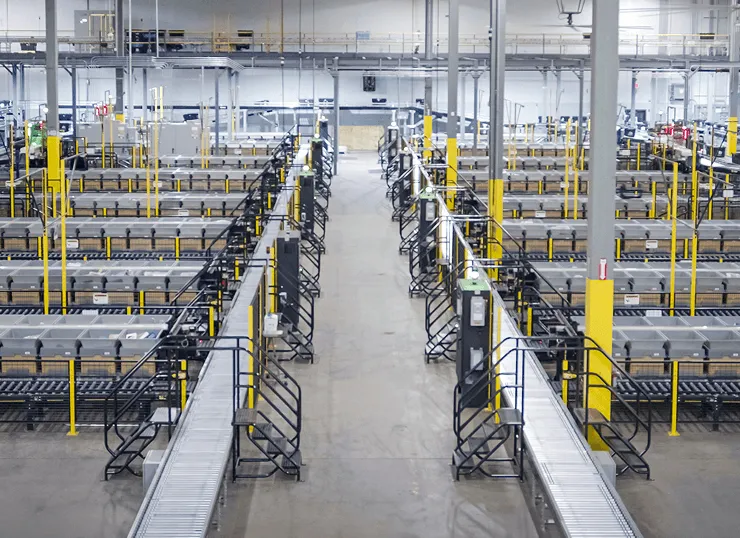
A traditional unit sorter can become an operational bottleneck when it requires a large footprint, manual chute handling and takeaway, extensive exception processing, or costly maintenance and downtime.
Robotic sortation is designed to address these challenges through a modular, distributed architecture. Capacity and destinations can be added or reconfigured as operational needs change, helping companies adapt without rebuilding a fixed sorter. Because work is distributed across multiple robots, an individual robot can typically be removed from service without stopping the entire system. This reduces single-point-of-failure risk and supports higher system availability. Robotic systems can also reduce manual handling, use space more efficiently, and provide a more flexible path for increasing capacity within an existing facility.
When Companies Usually Start Comparing Options
Robotic sortation is often evaluated when one of three things is happening.
A legacy sorter is nearing end of life. A tilt tray, bombay, or cross-belt sorter may still be running, but maintenance costs are rising, spare parts are harder to source, or downtime risk is becoming more disruptive.
The operation needs more capacity. The business may need higher throughput or more sort destinations , but the building cannot easily support another large fixed sorter. In this case, throughput per square foot becomes one of the most important metrics.
The network is changing. A company may be redesigning fulfillment around ecommerce, omnichannel, store replenishment, wholesale, or B2B complexity. In this scenario, sortation is not just an equipment decision. It becomes part of a broader network strategy.
Often requires manual chute handling, pack-out, takeaway, and exceptions
Can reduce labor requirements by up to 50% with automated takeaway and optimized induction
SKU coverage
May require manual exceptions for small, rolling, or oversized items
Near-100% SKU eligibility depending on product mix and system design
Scalability
Difficult to expand without major infrastructure changes
Systems can be added over time while operating without disruption
Reliability
May create a single point of failure
Distributed reliability helps maintain operation if part of the system needs service
Brownfield fit
Can be difficult to install in existing facilities
Designed to integrate into existing buildings, including environments such as mezzanines and irregular building columns
ROI drivers
Capacity continuity, but often high capital and maintenance cost
Labor savings, space savings, shipping savings, throughput density, exception reduction, and phased scalability
Where Robotic Sortation Changes the Business Case
Robotic sortation creates value by improving several parts of the operation at once.
Labor efficiency is often the most visible driver. Traditional unit sorters can still require people around the system for induction, chute management, pack-out, takeaway, and exception handling. Robotic sortation can reduce these dependencies through automated takeaway, efficient manual induction, and optional robotic induction.
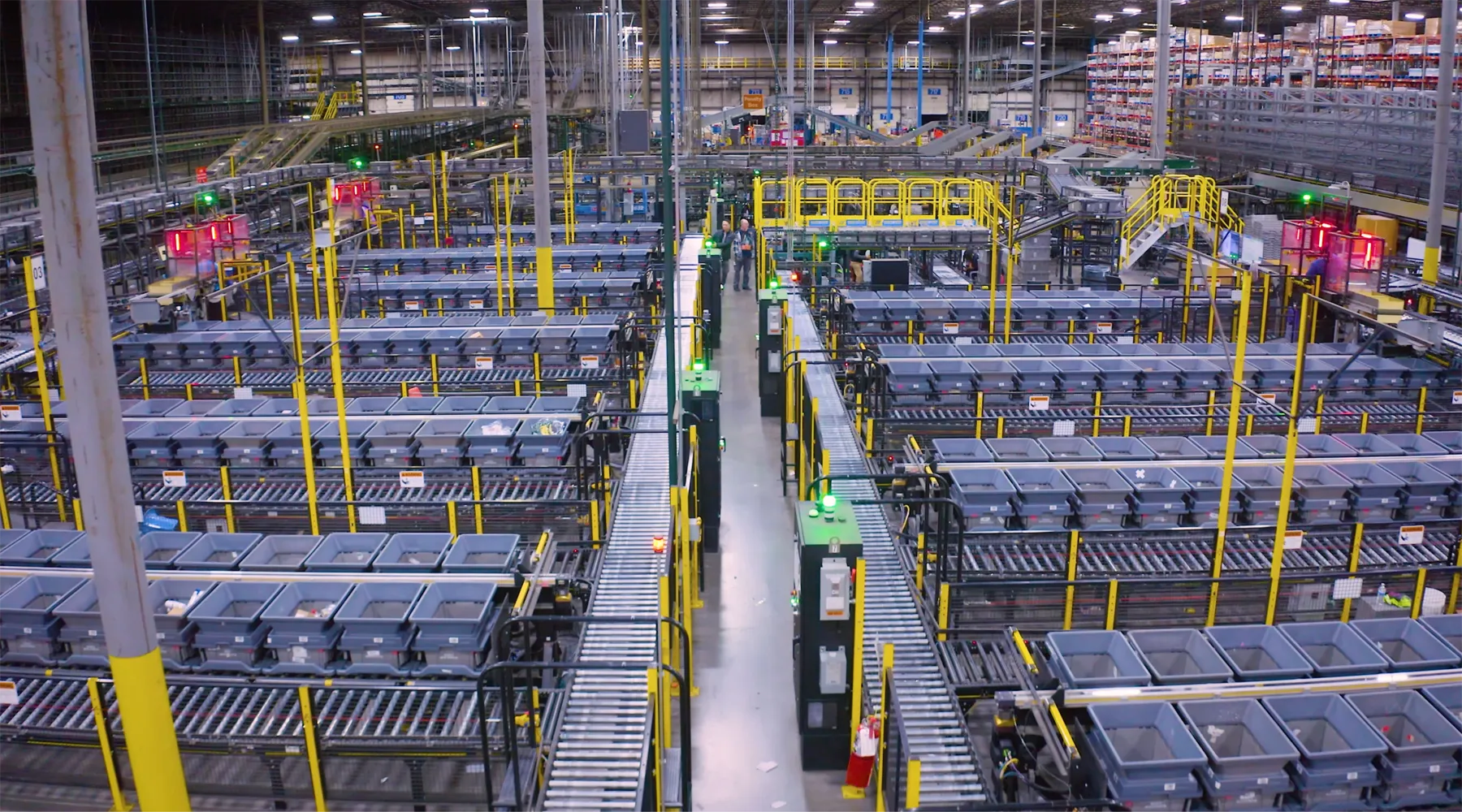
Space efficiency can be just as important. Traditional sorters often require long runs, chutes, access areas, and fixed infrastructure. Robotic sortation can deliver equivalent throughput capacity in roughly half the physical space, depending on the application. In one large-scale distribution example, 29 robotic sortation systems were integrated into an existing mezzanine and delivered approximately 4x the throughput per square foot compared with traditional solutions.
SKU eligibility can also have a major impact on labor and flow. Traditional unit sorters may struggle with small, rolling, oversized, or difficult-to-handle items. When those items fall out of the automated flow, they create manual exceptions. Robotic sortation can support near-100% SKU eligibility across a wider range of product sizes and types, depending on product mix and system design.
Scalability is another important difference. Traditional sorters often require companies to design around long-term forecasts. Robotic sortation is modular, which means systems can be added as demand grows. That can reduce the risk of overbuilding capacity before the business needs it.
Reliability matters most when volume is high and service windows are tight. Traditional unit sorters can create a single point of failure. Robotic sortation distributes work across systems, which can help keep the operation moving even if part of the system needs service.
Best-Fit Use Cases
Robotic sortation is not a universal replacement for every sorter in every facility. It is strongest where labor, space, SKU variability, and scalability are material constraints.
Store replenishment Robotic sortation can support outbound item sortation for store replenishment. It is especially useful when store demand varies and outbound destinations are changing frequently.
Wholesale and distribution Wholesale and distributor operations often require split-case fulfillment, sort-to-tote, sort-to-case, and accurate order consolidation. Robotic sortation can help reduce manual touches while improving flow consistency.
Ecommerce and omnichannel fulfillment Robotic sortation is well suited for ecommerce and omnichannel operations with high lines per order, significant SKU repetition, and many outbound destinations. The value is highest when the operation needs to sort many items without adding labor or expanding the footprint.
When evaluating robotic sortation, the purchase price is only one part of the decision. The stronger question is how the system changes the total cost and performance of the operation.
A strong business case should answer questions like:
How much labor can be reduced or reassigned?
How many more units can move through the same footprint?
How many manual exceptions can be eliminated?
Can the system help avoid a building expansion or major sorter replacement?
How does it affect uptime, maintenance, transportation, and peak-season performance?
The most important metrics to review include labor hours, cost per sorted unit, throughput per square foot, SKU eligibility, manual exception rates, induction productivity, pack-out and takeaway labor, system uptime, container utilization, maintenance costs, downtime risk, and avoided expansion or replacement costs.
Together, these metrics show where robotic sortation creates the most value. For some operations, the biggest driver will be labor savings. For others, it may be space efficiency, higher throughput, fewer exceptions, or the ability to scale capacity without a major facility redesign.
What to Evaluate Before Investing
A successful robotic sortation project depends on more than the sorter itself. Leaders should evaluate the full operating model before making an investment.
Start with the operational constraint. Is the facility limited by labor, footprint, throughput, SKU variability, uptime, store count, ecommerce growth, or an aging sorter?
Then map the current cost of sortation. Document labor, maintenance, downtime, exception rates, floor space, throughput, transportation impact, overtime, and peak-season labor.
Next, evaluate the SKU and order profile. Product size, shape, packaging type, order composition, and destination complexity all affect system design.
Finally, validate the design through simulation. A strong simulation should show expected performance, labor requirements, peak flow behavior, upstream and downstream impacts, bottlenecks, expansion options, and facility fit.
Is Robotic Sortation a Strong Fit for Your Operation?
Robotic sortation is often a strong fit when an operation is running into more than one constraint at the same time. The most common signs are high labor requirements, limited floor space, frequent manual exceptions, or an aging tilt tray, bombay, or cross-belt sorter that is becoming harder to maintain.
It can also be a strong option for facilities with a large or changing SKU mix, high store count, complex order profiles, or peak-season service risk. In these environments, robotic sortation can help increase throughput without requiring a relocation, major facility expansion, or full redesign of the existing operation.
The business case is usually strongest when the facility needs to support store replenishment, ecommerce, wholesale, B2B, or omnichannel fulfillment in the same network while still maintaining flexibility for future growth.
Robotic sortation may be less compelling for operations with low volume, few sort destinations, minimal SKU variability, available labor, ample floor space, or no meaningful need to scale capacity over time.
Final Thought
Traditional unit sorters solved an important problem: how to move large volumes of items through a fixed automated path. Today’s fulfillment leaders are solving a different problem. They need to increase capacity, reduce labor dependency, support more SKU variability, and scale inside existing buildings.
Robotic sortation offers a more flexible path forward.
For organizations evaluating sorter replacement, network growth, or automation modernization, the next step is to model the operation with real data. A custom simulation can show whether robotic sortation can reduce labor, increase throughput density, improve SKU coverage, lower exception handling, and scale inside the existing facility.
That is where the decision becomes clear: not whether robotic sortation is newer, but whether it can improve cost, capacity, resilience, and risk in the specific operation you need to run.
MODEX is usually where the industry shows off. This year, it did something more valuable. It showed what actually works.
If you walked the floor expecting the kind of demo-reel spectacle that defined the last few shows, you probably left feeling a little flat. There were fewer “wow” moments. Fewer crowds three-deep around a robot doing something impractical at high speed. Fewer keynote-quality unveilings of products that won’t ship for another two years.
What Atlanta made clear is that warehouse automation has moved beyond proving capability and into proving performance. The focus has shifted from what technology can do to what it’s already doing, in real facilities, under real operating conditions. That shift doesn’t always look exciting on the show floor, but it’s the most important progress this market has made in years.
The shift from demo to deployment
This year, vendors grounded their stories in live deployments. Throughput numbers were tied to production environments. SKU sets reflected real variability rather than carefully selected samples. Systems were presented as part of broader workflows, not isolated capabilities.
That shift raises the bar. Automation is no longer judged by how it performs in a demo. It’s judged by how it performs in the middle of a live operation, when conditions are unpredictable and consistency matters most.
Picking reached a turning point
Robotic picking has been a focal point at MODEX for years, but often as a demonstration of potential rather than a reflection of reality. This year, it showed up with a different level of credibility.
The strongest demonstrations focused on what’s already running. Vendors highlighted the SKUs they’re actively handling, and they invited attendees to try their own SKUs as part of the demo. They focused on features that show up in real workflows, shifting the emphasis from technical possibility to operational reliability.
Just as important, picking is no longer being positioned as a standalone capability. At MODEX, picking was often showcased as being integrated into larger workflows, embedded into systems that are already delivering value across fulfillment operations.
That’s what maturity looks like. Picking is no longer a showcase feature, it’s become a capability you’re expected to have.
AI was everywhere, but the impact was quieter
AI was present across nearly every booth and conversation, but not in the form of a single defining breakthrough.
Instead, its impact showed up in smaller, more practical ways:
Faster image processing for data capture
Generalization to handle edge cases that used to require a human
Smarter contextualization across labels and packaging variants
Incremental improvements that reduce friction and increase reliability
Individually, these advances may not stand out. Together, they compound into meaningful operational gains.
There’s also a broader shift underway. AI is reducing the time and cost required to build software. Capabilities that once required significant investment can now be developed more quickly and by smaller teams.
As a result, software alone is no longer enough. The advantage is shifting toward data, real-world experience, and the ability to deliver consistent performance at scale.
It’s easier than ever to build a compelling demo. It’s still difficult to deliver reliable outcomes in production.
A more complex ecosystem
As systems become more capable and easier to deploy, the structure of the ecosystem is evolving.
More vendors are positioning themselves as orchestration layers, aiming to connect different technologies and coordinate workflows across environments. At the same time, WMS providers are expanding their capabilities, and some technology vendors are integrating more directly into customer systems.
The opportunity is clear, but so is the challenge. Orchestration only works if it can reliably manage the complexity beneath it, and that complexity is increasing as the number of vendors and technologies grows.
The industry is making progress, but the gap between vision and reality is still there. The most effective solutions will be the ones that can operate consistently across changing systems, not just connect to them in theory.
What it means for the industry
Taken together, these trends point to a larger shift.
Automation is becoming more accessible. Software is becoming faster to build. Systems are becoming easier to integrate. At the same time, expectations are rising.
Operators are no longer evaluating whether automation can work. They’re evaluating whether it will deliver results in their specific environment, within their constraints, on their timeline.
That changes where value is created.Technical capability still matters, but operational expertise, real-world validation, and the ability to execute consistently are becoming the defining factors.
The takeaway
MODEX 2026 didn’t rely on spectacle to make its point. It reflected an industry that’s becoming more grounded, more practical, and more focused on outcomes.
The conversation centered on practicality: “Can this technology work in my building, with my people, on my SKUs, by Q3?”
That shift from possibility to performance is not always dramatic, but it is significant. It favors solutions that are already operating at scale, proven in real environments rather than controlled demos.
That’s where the industry is heading, and where leaders like Berkshire Grey have been focused for years: delivering systems that perform in production, handle real-world complexity, and drive measurable outcomes. As expectations continue to rise, that distinction will only become more important.