
Resources
Recent years have brought on a host of new challenges for companies. Chief among these are a changing labor market, higher customer expectations, the rapid growth of eCommerce and strained capacity.
But with those challenges, innovative ways to handle order fulfillment have emerged, with AI-enabled picking automation in the warehouse being a key solution. “Robotic picking systems,” says Chris Geyer, vice president and fellow with Berkshire Grey, a leader in AIenabled robotic solutions that automate supply chain processes, “offer that different way to get work done.”
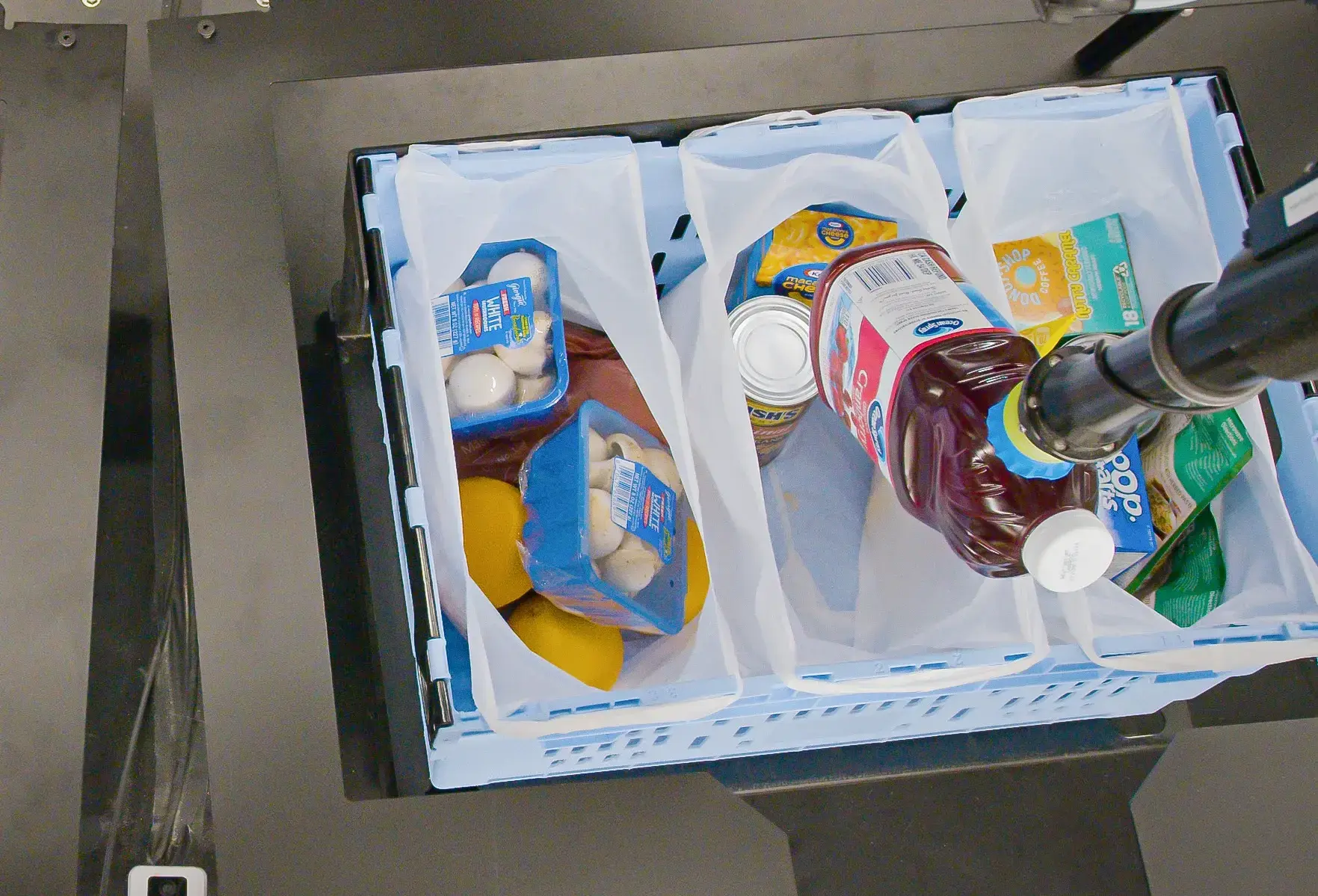
Warehouses no longer must rely strictly on human labor to fulfill orders. They can now use AI-enabled robots to do the repetitive work of picking, and packing orders, allowing the humans to focus on higher level tasks. Automation is also increasing efficiency, precision and productivity, a trifecta in a world where next- or same-day delivery is increasingly popular.
&nAs with any new or innovative technology, there are interesting challenges to adoption. Solutions can vary depending on the type of automation selected. While some warehouses see immediate improvements after transitioning to robotic picking, others struggle to meet their key performance indicators (KPIs) and opt not to move forward with a full rollout of the technology after trialing it. Why, then, despite the apparent benefits of automation, do some robotic picking deployments fall short of expectations?
Geyer draws from an extensive, decades-spanning background in robotics, along with knowledge garnered during his impressive tenure of over 10 years at Berkshire Grey. When embarking on the execution of a successful robotic picking project, he says,
He underscores the importance of recognizing that multiple stakeholders within any company contribute valuable insights from their respective disciplines, each with valid expectations about what automation should deliver. According to him, the true secrets lie in the meticulous design and implementation of a robotic picking solution, tailored to meet the specific needs and nuances of each organization.
Geyer shares key insights into what makes a robotics launch successful and what companies should be looking for in their technology before, during, and well after deployment.
The first thing a company should do, says Geyer, is to take all stakeholder viewpoints into account when deciding how to implement robotics into the warehouse. “Our customers are represented by multiple parties — customer service, ops, engineering and so on,” he says. “Each comes to a project with different interests. They each bring valuable insights from their disciplines and have valid expectations about what automation needs to provide.”
For instance, he says, oftentimes customer service, or the quality-assurance team, are not included in initial discussions about robotic deployment, even if the company does consider customer satisfaction a top priority. “We consider customer service one of the key stakeholders.” By including them in the conversation from day one and acknowledging that quality assurance issues can indeed start in the warehouse, Berkshire Grey minimizes issues with that department down the line.
Once all the internal parties are aligned, it’s important to find the right robotic automation partner. There are a host of things to consider when implementing robotics into a warehouse, and the proper support can ensure that companies navigate those crucial details successfully.
Compatibility is a great place to start. We do an analysis of SKU eligibility for every project,” says Geyer. To ensure compatibility, select a partner that can accommodate a wide range of SKUs. Berkshire Grey technology, for example, offers close to 100% SKU coverage, including oversized, unbagged, pillowed and porous items that have typically been viewed as ineligible for robotic picking.
“We provide our customers with AI-enabled robotic systems. These systems use AI to learn how to improve their performance on their own, and we built them to scale to the needs of large enterprises, ensuring their security and reliability.”
— Chris Geyer, Vice President and Fellow, Berkshire Grey
The technology a company ultimately implements can make or break their robotics rollout. Geyer notes the difference between “smart robots” and “robots designed smartly,” stressing that both are needed in an automated warehouse. “Our philosophy and technical approach has been to employ a synergy of smart robots and robots designed smartly,” he says. “We believe that neither of these alone are sufficient for the best picking systems. With all the buzz around AI, some believe that AI will solve all their problems. And it’s true that AI is a required component, but it’s not enough. The brain needs a capable body.”
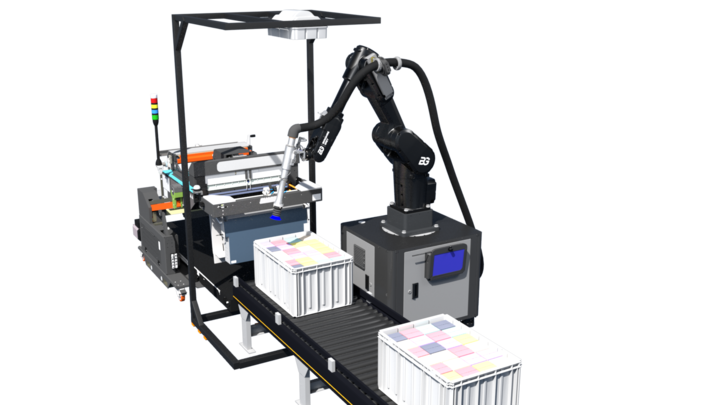
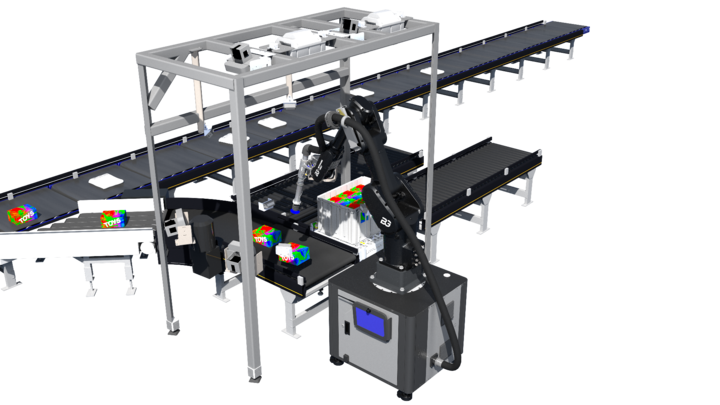
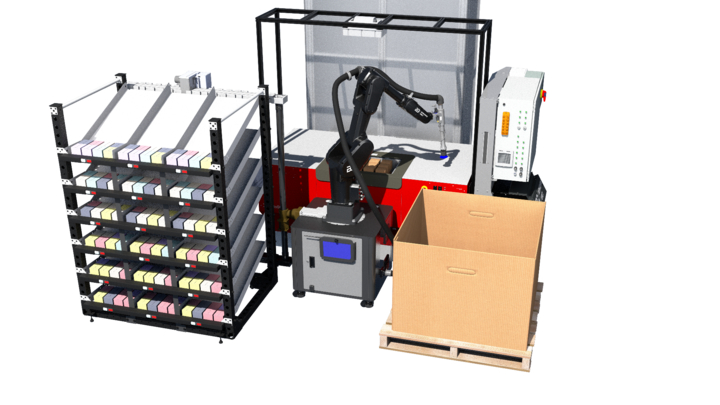
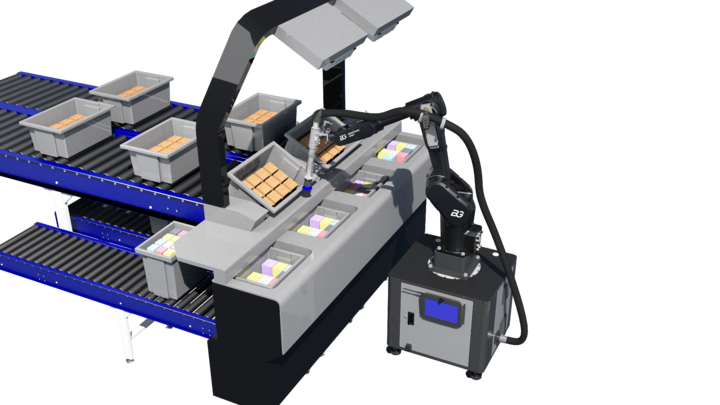
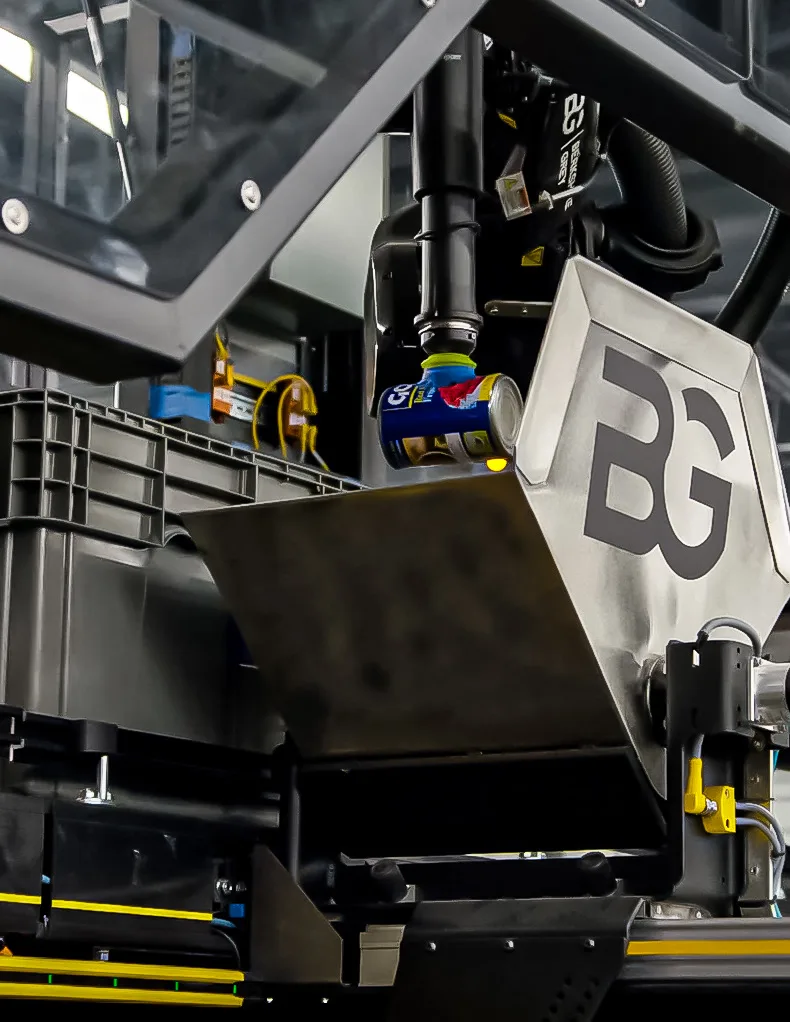
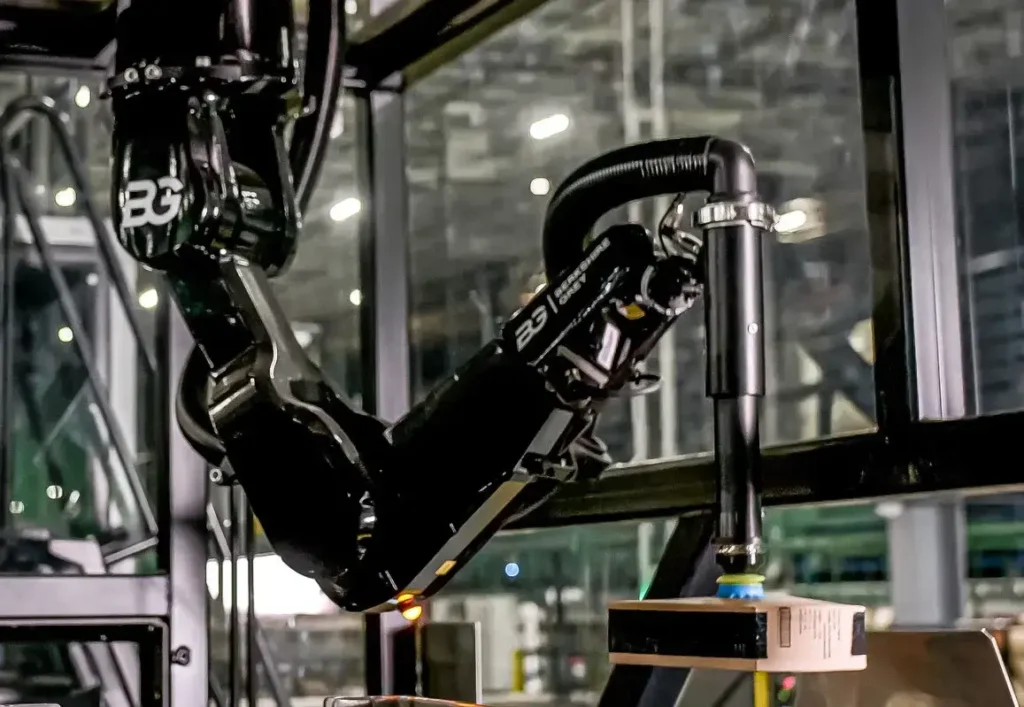
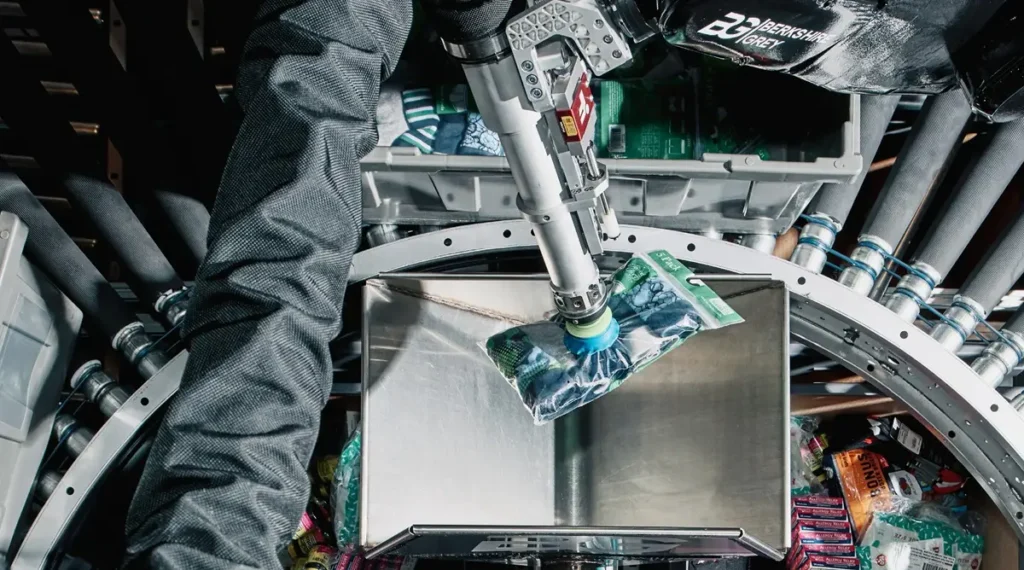
As an illustration of smart robotic design, Berkshire Grey’s patented SpectrumGripper® technology employs vacuum suction to sort and pack items efficiently on an assembly line. “If you look at other robotic gripping technology, those robots can’t pick up many common items. But using the principles of fluid mechanics, we at Berkshire Grey developed a proprietary approach to gripping that’s able to do a bit of a magic trick.” The SpectrumGripper®, he says, is able to pick up most products that a human worker can grab one-handed, including apparel, both bagged and unbagged goods or other products with irregular surfaces that traditional grippers might struggle to handle.
“Smart robots,” on the other hand, refers to artificial intelligence (AI). This technology allows the robots to adapt to irregular scenarios and improve their processes as they go. “We provide our customers with AI-enabled robotic systems,” says Geyer. “These systems use AI to learn how to improve their performance on their own, and we built them to scale to the needs of large enterprises, ensuring their security and reliability.”
Without humans to manually ensure accuracy, AI can help the smartly designed robots manage deviations from what Geyer calls “the happy path,” or the ideal, planned outcome. In practice, of course, the ideal outcome is rarely realistic. “The software deployed to real warehouses has to deal with the deviations from the happy path,” he says. For example, if the BG robotic arm with SpectrumGripper® technology intends to pick up one item from a pile but accidentally grabs two items that are stuck together, AI will help the robot learn the sensor conditions under which it might be picking up two items. It could then detect those conditions in the future, and instead of packing both stuck items, it would put the pair of items back and choose a different unit. This, says Geyer, is an example of a smart (AI-enabled) robot built on smartly designed hardware.
The technology you choose needs to be fast, accurate, reliable and, most importantly, autonomous. “If a robot requires too much handholding, that’s a problem,” says Geyer. What it really comes down to, though, is whether or not you can rely on the robot to do the work it was designed to do.
“That comes down to a couple of different things. One element of that reliability is the quality of the work performed by the robot. So, it’s not just about speed, it’s about the quality, the care for the goods and the accuracy. Another element is the degree of supervision required. What’s the ratio of robots to people?
How often does a person need to help that robot? And we focus on getting the robot to do as much self-supervised problem-solving as it can.” Ideally, the robots employed in your warehouse will have a 99.99% accuracy rate, which is enough for companies to meet or exceed service-level agreement (SLA) targets.
This high level of accuracy means that the robots can pick, place and pack orders without any human intervention. That, says Geyer, is what we mean by a truly touchless order fulfillment system. “We stress test all of our proprietary hardware,” he adds. “We have devices that are actually picking items up and down all day long, and that’s part of how we ensure our systems are designed to function in even the world’s toughest warehouses.
The future of AI–enabled robotic picking Though AI may seem futuristic to some, it marks just the initial stages of a transformative journey for businesses spanning various industries. Contemplating the future landscape of warehouse technology, Geyer anticipates a trajectory where robots will progressively undertake increased picking tasks and play a more substantial role in the years ahead, and with that will come an increasingly safer and more productive warehouse experience.
Companies that are embracing this reality now are already seeing results and are ahead of the curve. They will be better prepared for an inevitably autonomous future.