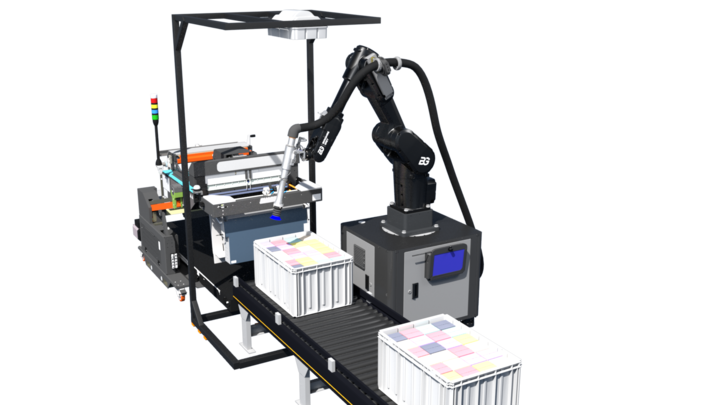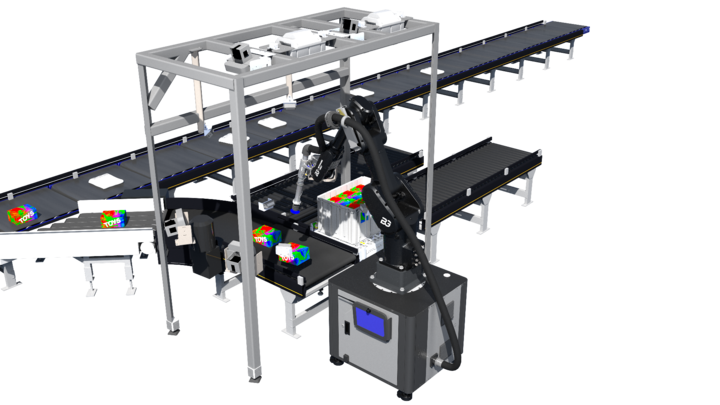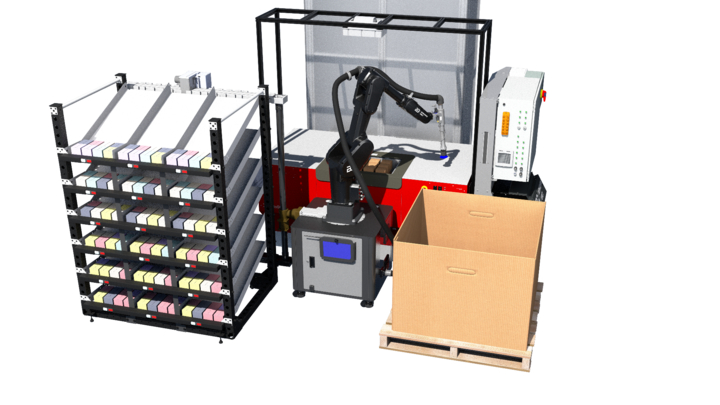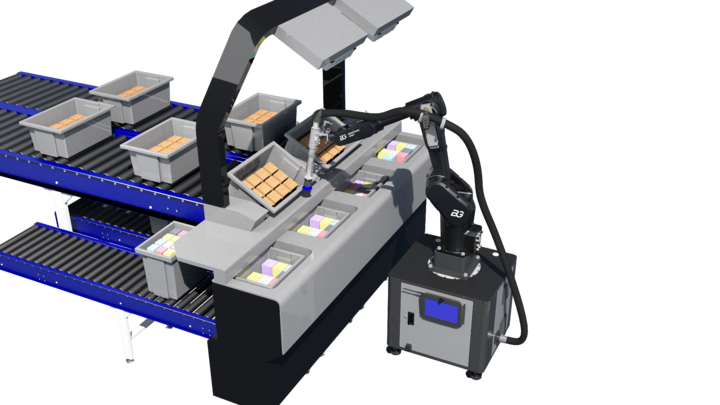

Berkshire Grey helps retailers automate difficult warehouse tasks while supporting faster fulfillment operations. Modern retail networks must move a wide range of products across channels without slowing daily throughput. Automation can reduce manual touchpoints across picking, sorting, packing, and outbound shipping. That consistency gives operators stronger capacity planning when order profiles change without warning. Retailers also need flexible systems that accommodate changing assortments and seasonal demand patterns.
Berkshire Grey approaches retail industry supply chain solutions through practical warehouse automation products. Retail supply chain management depends on reliable movement from receiving through outbound fulfillment. Each handoff can significantly influence speed, accuracy, labor requirements, and available processing capacity. Reducing avoidable handling helps retailers manage their operations with fewer daily workflow interruptions. Connected automation also supports more accurate methods for moving merchandise between stages. Strong execution begins where physical product movement meets disciplined operational planning inside facilities.
Berkshire Grey supports connected fulfillment by automating tasks that frequently create manual bottlenecks. Store replenishment, ecommerce orders, promotions, returns, and wholesale flows often share resources today. When processes fragment, facilities can lose productivity through staging, scanning, and repeated movement. A coordinated flow keeps inventory progressing toward destinations with fewer unnecessary touches overall. That structure gives retail logistics teams greater control when channel priorities shift suddenly. More predictable movement can protect service levels while preserving valuable labor for exceptions.
Berkshire Grey helps increase fulfillment speed by addressing repetitive work inside distribution operations. Faster processing matters because customer demand rarely arrives in perfectly even daily patterns. Retailers need capacity that can keep orders moving during promotions and seasonal surges. Automated picking and sortation can significantly reduce delays caused by manual handling constraints. Reliable throughput also helps teams consistently meet cutoffs, replenishment windows, and outbound schedules. Speed becomes more valuable when accuracy and stability remain strong across changing workloads.
Berkshire Grey strengthens retail supply chain management by automating physical work with consistency. Good planning needs dependable execution after inventory enters a warehouse or distribution center. Systems that process items predictably can make capacity assumptions more useful during planning. Retail leaders gain clearer control when recurring warehouse tasks require fewer manual decisions. Automation can complement inventory management by efficiently moving products through planned workflows. The result is a supply chain better prepared for shifting volume and complexity.
Berkshire Grey helps retailers move inventory efficiently when demand changes across selling channels. Customer demand can alter destination mixes, order profiles, and replenishment requirements without warning. Flexible automation allows facilities to respond without having to rebuild every process around temporary conditions. That flexibility matters when retail inventory includes apparel, cartons, polybags, and irregular merchandise. Consistent handling helps maintain flow even as product characteristics and priorities keep changing. Retailers can therefore protect fulfillment capacity while adapting operations to actual demand signals.
Berkshire Grey focuses automation on warehouse tasks where repetition and complexity consume labor. Identifying, picking, sorting, packing, and moving products can create substantial operational friction on a daily basis. Robotic systems can perform defined tasks continuously while supporting more predictable facility performance. That predictability helps businesses plan staffing and capacity around fewer manual constraints overall. Automation also reduces repetitive touches that can slow down products between major workflow stages. For retailers, improved flow can strengthen service while keeping operations easier to scale.
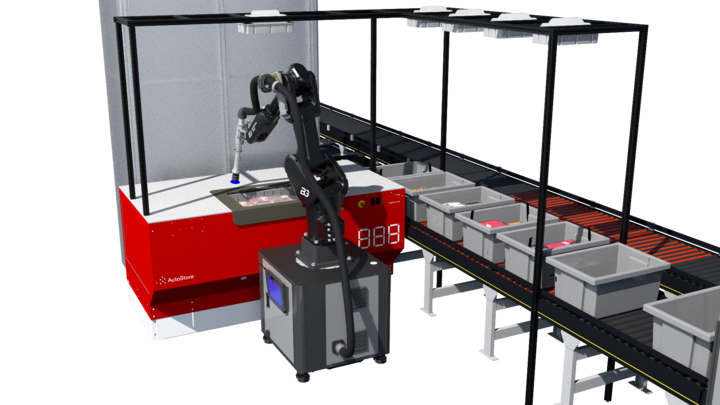
Berkshire Grey provides robotic picking technology designed for varied retail product assortments today. Modern picking must account for differences in size, shape, texture, weight, and packaging. Automated piece handling can reduce repetitive manual picking across high-volume fulfillment workflows. Consistent picking supports faster downstream sorting, packing, staging, and outbound processing. Retailers benefit when automation handles broad SKU mixes without constant process redesign work. Greater picking stability can help reduce bottlenecks before they spread through fulfillment operations.
Berkshire Grey combines perception, gripping, planning, and placement capabilities for automated picking tasks. This approach allows robotic handling to adapt before each product movement is completed. Adaptive grasping can support difficult items that challenge fixed handling methods during fulfillment. Accurate placement also matters because downstream workflows depend on orderly, dependable item transfers. Combining these capabilities creates a picking process designed for varied real-world inventory. That versatility can increase capacity without forcing teams into narrow product-handling rules.
Berkshire Grey helps retail operations move products toward store destinations with fewer delays. Store replenishment depends on the timely processing of inbound shipments, picking, sortation, staging, and outbound movement. Constraints at any stage can expose inventory availability to avoidable risks of fulfillment disruption. Automation can keep merchandise moving when labor pressure rises or volumes shift unexpectedly. More consistent flow supports store readiness without adding layers of temporary manual workarounds. Retailers gain a stronger foundation for keeping shelves supplied across changing demand conditions.
Berkshire Grey supports inventory availability by helping automate movement from inbound retail flows. Products that reach store-ready destinations quickly face fewer delays before final distribution. That improvement can help replenishment teams maintain steadier service across busy operating periods. Reliable sortation also makes destination handling easier when store networks include many locations. Retail inventory moves more effectively when exceptions are contained instead of dominating workflows. Better execution can protect availability while reducing pressure on employees handling recurring tasks.
Berkshire Grey helps e-commerce fulfillment operations handle fast-moving order volume more consistently. Digital commerce creates broad assortments, variable order profiles, and demanding processing windows daily. Manual picking and exception handling can become constraints as SKU complexity increases rapidly. Robotic automation supports repeatable movement while orders continue changing throughout the operating day. Faster internal processing can help facilities protect outbound schedules and customer service expectations. Scalable fulfillment capacity becomes especially valuable when promotions or seasonal peaks raise demand.
Berkshire Grey designs automation to handle diverse products across changing retail fulfillment environments. Assortments may include apparel, general merchandise, packages, cartons, polybags, and irregular items daily. Broad handling capability can reduce the frequency with which products are diverted to manual exceptions. That matters because exception work can absorb labor and interrupt otherwise efficient flows. Flexible item processing helps retailers adapt as merchandising strategies and product mixes evolve. Greater adaptability can keep fulfillment moving without creating specialized paths for every assortment.
Berkshire Grey helps facilities support store and ecommerce workflows within shared operating environments. Retail networks increasingly ask for common labor pools and floor space to serve channels. When each flow relies on manual workarounds, capacity becomes harder to consistently protect daily. Flexible automation can reduce friction between replenishment, fulfillment, promotions, and parcel processing workflows. That coordination helps operators shift their attention toward exceptions rather than repetitive handling tasks. Shared infrastructure becomes more useful when technology supports the smooth, daily adjustment of channel priorities.
Berkshire Grey supports scale by pairing automated handling with adaptable fulfillment process designs. Scaling effectively requires more than adding equipment whenever order volumes rise sharply and unexpectedly. Flexible systems can address immediate constraints while preserving room for future capacity growth. This approach helps businesses avoid unnecessary process complexity during expansion or seasonal adjustment. Retailers can focus automation where physical workflows create the greatest operational burden first. Capacity then becomes easier to expand as demand patterns and network requirements change.
Berkshire Grey helps automate sorting and routing tasks that shape outbound fulfillment performance. Retail logistics depend on directing products and parcels toward the correct destinations without delay. Manual sorting can become harder to scale as the variety and volume of packages increase. Automated routing supports repeatable decisions while keeping high-volume movement organized consistently daily. Fewer sorting bottlenecks can protect downstream staging, shipping, and carrier handoff activities overall. Efficient routing also significantly reduces unnecessary handling between internal workflows and outbound destinations.
Berkshire Grey offers parcel sortation technology designed for a wide range of package types and volumes. Intelligent routing can direct parcels through defined paths with reliable repeatable processing performance. Higher throughput matters when e-commerce orders create dense outbound activity during peak periods. Automated sorting helps facilities process more packages without a proportional increase in manual touch requirements. That efficiency can support faster fulfillment while keeping destination accuracy central throughout operations. Parcel movement becomes easier to manage when routing decisions remain consistent under pressure.
Berkshire Grey helps retailers reduce supply chain costs by automating labor-intensive workflows. Operating costs often rise when repetitive tasks require heavy staffing across multiple shifts. Automation can shift employees toward exception handling, supervision, maintenance, and higher-value work. Fewer manual touches can also reduce process friction that quietly consumes productive time. More predictable throughput helps operators plan capacity without constantly compensating for variability daily. Cost improvement becomes more sustainable when efficiency grows alongside accuracy and service stability.
Berkshire Grey reduces labor dependency by automating recurring physical tasks within fulfillment operations. Warehouse staffing can be difficult when demand surges create sudden needs across shifts. Robotic systems provide repeatable execution that is less exposed to routine staffing fluctuations. Reducing manual touches also shortens the path products travel through common facility workflows. Employees can concentrate on exceptions and responsibilities where human judgment remains especially valuable. This balance supports efficiency while preserving operational attention for problems needing skilled intervention.
Berkshire Grey helps fulfillment operations scale when customer demand rises beyond normal patterns. Seasonal events and promotions can quickly create short periods of intense warehouse activity. Building temporary manual processes for every surge can introduce training and coordination problems. Automation provides a stable capacity that can absorb changing volume with fewer process changes. Scalable technology also helps teams avoid overbuilding resources before additional capacity is required. Peak readiness improves when core workflows remain consistent even as daily priorities change.
Berkshire Grey supports steadier throughput during volume spikes by automating workflows that are likely to be bottlenecks. Picking and sortation pressure can rise together when promotions drive concentrated order activity. Stable automated execution reduces the need to redesign process paths for temporary peaks. Teams can preserve familiar workflows while increasing the amount of product processed daily. That stability makes planning easier because capacity depends less on emergency staffing levels. Retailers gain resilience when peak performance reflects their designed capability rather than improvised workarounds.
Berkshire Grey helps retailers increase productive capacity while using warehouse space more efficiently. Facility expansion is not always the best response when existing workflows constrain throughput. High-density automation can organize product movement without multiplying staging and travel requirements. Efficient sortation also reduces the footprint consumed by repetitive manual handling activities inside. Better space utilization gives businesses more flexibility before committing to larger facilities elsewhere. Capacity gains become especially valuable in retail networks where floor space stays constrained.
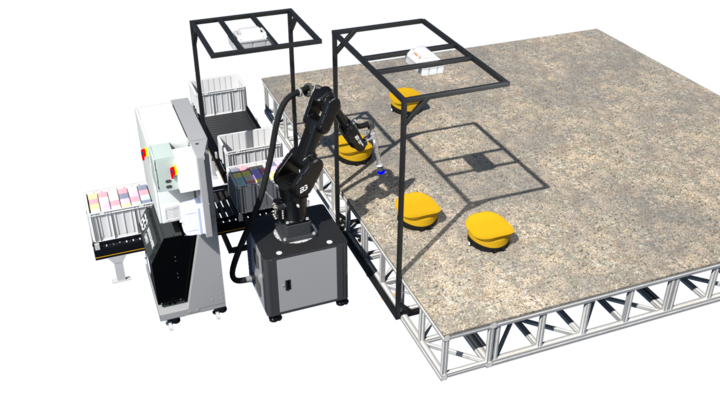
Berkshire Grey supports high-density sortation, helping consolidate varied retail fulfillment flows. Consolidation can reduce separate process paths that otherwise consume equipment, space, and labor. Growing networks need flexible destinations as stores, channels, promotions, and order profiles change. Automated robotic shuttle sortation can support many destinations while keeping movement organized and compact. That density helps operators preserve valuable floor space while increasing overall processing capability. Retail expansion becomes easier when facility capacity can grow without a proportionate increase in space.
Berkshire Grey supports capacity growth through automation designed around practical operational constraints today. Expansion should solve throughput limitations without creating unnecessary layers of process management complexity. Modular thinking allows retailers to address current bottlenecks before planning additional growth phases. That approach can preserve flexibility as order volumes and network requirements continue evolving. Automation becomes easier to justify when each deployment targets a measurable operating constraint. Retailers can build capacity deliberately while maintaining simpler workflows and stronger process control.
Berkshire Grey helps retail logistics operations become less dependent on fragile manual processes. Operational resilience matters when labor availability, demand, assortments, and shipping priorities keep changing. Automation enables repeatable execution of tasks that otherwise vary across people and shifts. More consistent performance reduces the operational impact of routine staffing and volume changes. Resilient facilities can maintain service levels while responding to disruptions with greater control. That reliability supports long-term network planning without entirely ignoring the realities of daily execution.
Berkshire Grey supports stable execution by automating workflows that vary daily. Order profiles can change quickly as channels, promotions, inventory, and destinations shift simultaneously. Consistent automation helps facilities absorb those changes without repeatedly rebuilding every operating routine. Stable processes also make performance easier to measure across shifts and operating periods. Greater consistency can reveal bottlenecks more clearly because fewer variables obscure underlying problems. Retailers gain stronger control when operational performance remains predictable amid changing conditions.
Berkshire Grey designs warehouse automation systems that integrate effectively with broader retail operating environments. Automation delivers greater value when physical systems fit established processes and information flows. Integration helps coordinate equipment behavior with priorities coming from warehouse management systems daily. Connected operations can reduce duplicate decisions and keep movement aligned with workflow needs. Strong integration also makes automation easier to manage consistently within existing facility routines. Retailers benefit when technology supports operations instead of forcing unnecessary process fragmentation elsewhere.
Berkshire Grey connects robotic automation capabilities with warehouse workflows through software-driven orchestration tools. Operational priorities can guide automated actions as inventory moves between important processing stages. Software integration helps systems interpret conditions and execute tasks in accordance with workflow requirements. This coordination becomes critical when multiple channels compete for shared resources and capacity. Connected automation can improve visibility into how physical work progresses across facilities each day. Retailers gain a more manageable operation when technology and process logic remain aligned.
Berkshire Grey helps operators achieve more predictable performance across automated fulfillment workflows every day. Visibility matters because managers need data that reflects what physical processes actually achieve. Consistent systems make throughput, exceptions, and utilization easier to compare over time periods. Better operational data can support planning decisions about staffing, capacity, and workflow priorities. Analytics become more useful when the underlying execution is stable enough for meaningful comparison. Retailers can manage their operations confidently when performance signals remain clear and actionable.
Berkshire Grey supports measurable operations by pairing automation with consistent workflow execution data. Useful data can show where throughput slows, exceptions rise, or capacity goes unused. Managers can use those signals to adjust planning before small constraints become larger. Reliable information also helps teams evaluate whether automation is meeting intended operational goals. Better visibility creates stronger accountability across processes involving people, software, and robotic systems. Retailers gain a clearer basis for continuous improvement rooted in actual facility performance.
Berkshire Grey provides retailers with a focused path to automating high-impact warehouse workflows. The right retail supply chain solution should directly address specific operational constraints. Decision makers should examine throughput, labor exposure, SKU complexity, space, and scalability needs. Integration requirements and service expectations also matter when evaluating the long-term value of automation. A practical deployment should improve daily execution without creating avoidable operating complexity elsewhere. Retailers benefit most when automation decisions connect technological capabilities directly to business priorities.
Berkshire Grey emphasizes automation that can scale as retail operating requirements continue changing. Long-term value depends on more than solving a single temporary facility bottleneck. Retailers should carefully consider adaptability, maintainability, integration, support, throughput, and future capacity needs. A scalable system can preserve the usefulness of the investment as assortment and volume patterns evolve. Dependable service and ongoing improvement also help automation remain productive after deployment periods. Strong solutions consistently combine practical hardware, software, and operational expertise around measurable outcomes.
Berkshire Grey brings retail-focused robotics, software, and operational experience to fulfillment challenges. Its systems address picking, sortation, unloading, and movement within demanding warehouse environments today. That focus aligns with retailers seeking faster throughput, consistency, and reduced labor dependency. Flexible configurations can support store replenishment, e-commerce fulfillment, parcel handling, and changing assortments. Bedford, Massachusetts, roots place the company within a longstanding technology and engineering region. For modern retail operations, that combination supports practical automation built around real workflows.
Answers to commonly asked questions.
Retail industry supply chain solutions combine processes and technology that help retailers move inventory efficiently from inbound handling through fulfillment, replenishment, sorting, and outbound operations. Berkshire Grey supports these goals with robotic automation designed to improve throughput, reduce manual touches, strengthen consistency, and create scalable capacity across warehouse workflows today.
Automation can reduce supply chain costs by reducing reliance on repetitive manual handling, improving throughput consistency, using space more efficiently, and reducing process friction across facilities. Berkshire Grey targets high-impact tasks such as picking, sorting, unloading, and movement, so retailers can build efficiency directly around measurable physical operations and constraints.
Yes, Berkshire Grey provides automation that supports retail workflows, including store replenishment, e-commerce fulfillment, sortation, picking, parcel handling, and shared distribution center operations at scale. These capabilities help facilities keep inventory moving across channels while reducing manual workarounds, protecting capacity, and responding more effectively when order profiles and volumes change.
Robotic picking can improve fulfillment by consistently handling repetitive item movement, increasing throughput, reducing labor dependence, and reliably supplying downstream packing and sorting workflows. Berkshire Grey combines perception, gripping, planning, and placement capabilities to address diverse SKU characteristics and help automated picking remain stable as retail assortments continue evolving.
Scalability matters because retail logistics must handle seasonal peaks, promotions, assortment changes, channel shifts, and network growth without having to rebuild processes whenever operating conditions change materially. Berkshire Grey supports scalable automation that lets retailers address current constraints first, then expand capacity as demand grows and fulfillment requirements become increasingly complex operationally.
Retailers need fulfillment operations that can move varied inventory faster, protect service levels, use labor wisely, and adapt as channels, assortments, and customer demand continue changing rapidly every day. Berkshire Grey provides retail organizations with a practical automation foundation for picking, sorting, unloading, and movement, while supporting higher throughput, consistency, scalability, and operational resilience across facilities and networks today. From store replenishment to ecommerce fulfillment, well-placed robotics can reduce manual touches, create more predictable capacity, and help warehouse teams manage growing complexity with confidence each operating day. For businesses seeking retail industry supply chain solutions built around real physical workflows, thoughtful automation can turn daily constraints into a clearer path toward sustained fulfillment performance and growth.
140 South Road. Bedford, MA 01730